
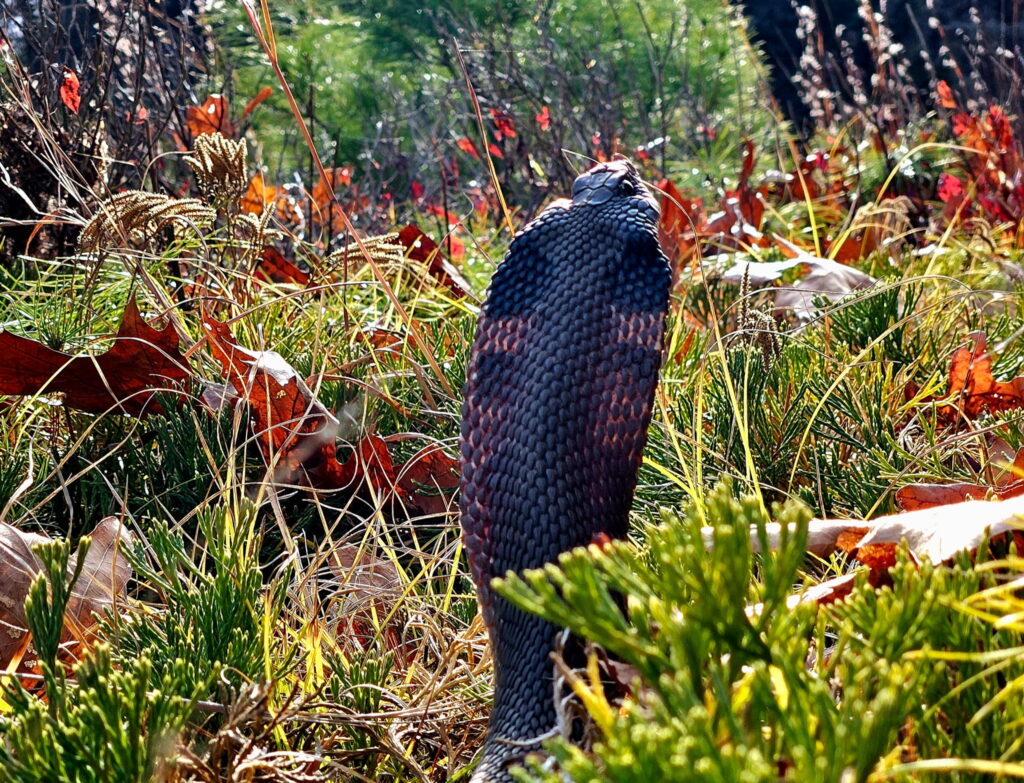
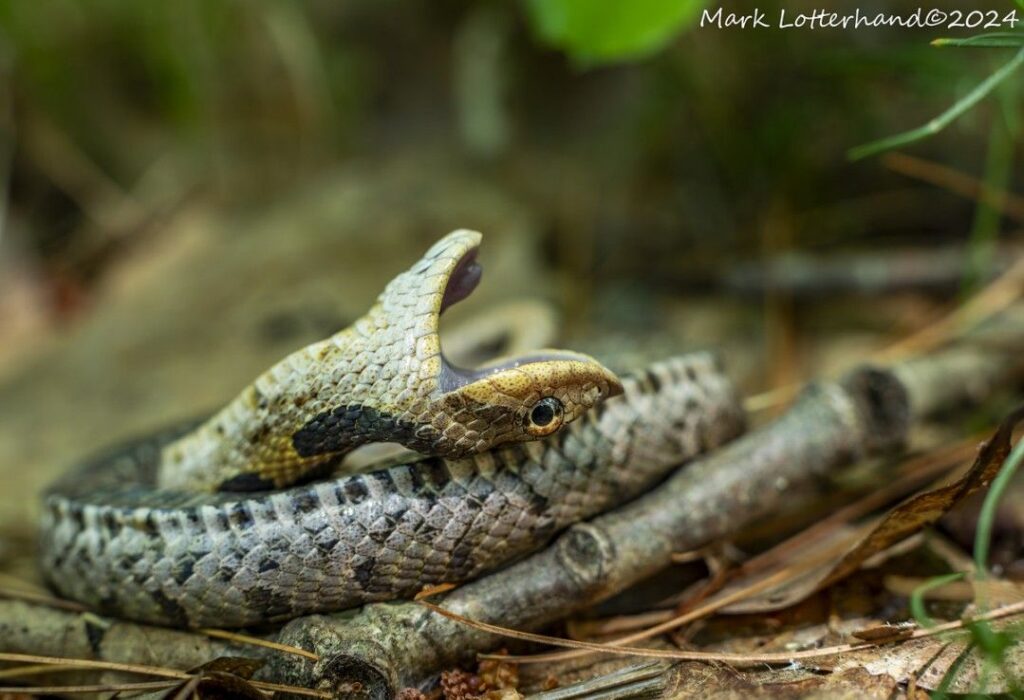
The eastern hog-nosed snake (Heterodon platirhinos) is one of the most interesting of the 14 native snakes in Massachusetts. The species has many unique behavioral traits that are unlike many of the other snake species in our region. For one, they can fan out their head and neck scales similar to a cobra to mimic the more dangerous species and warn off potential predators. They may even feign a strike, lunging at the threat in self-defense, though they rarely actually bite and are not venomous. If that does not deter the threat, they can also play dead but turning onto their back in a writhing display that may ward off a predator, a both comical and impressive behavior to observe.
Their diet is also somewhat unique in that they are specialists. Unlike more generalist species, like the garter snake, which may eat a more broad diet of amphibians and small mammals, the hog-nosed snake specializes on toads, although they may also consume other prey like small amphibians. The species is also fossorial, meaning that it spends a large portion of its time underground. This behavioral feature is part of their namesake (hog-nosed) with their blunt shaped nose being a critical tool allowing them to be excellent at digging and burrowing underground. Due to their proclivity for digging they have specific habitat needs including sandy soils and they also prefer a mosaic of habitat types including canopy openings or open sandpits.
The species is listed in Massachusetts as a species of special concern. The population is less abundant in the northeastern part of New England which is at the northern edge of the species range. The species faces a myriad of threats including habitat loss and fragmentation but also habitat succession as sites become closed canopy forests, a population may dwindle as its necessary habitat mosaic and early successional habitat is converted. Zoo New England has been working with a population of eastern hog-nosed snakes in central Massachusetts for five years to monitor the population and work towards a conservation management plan for the site.
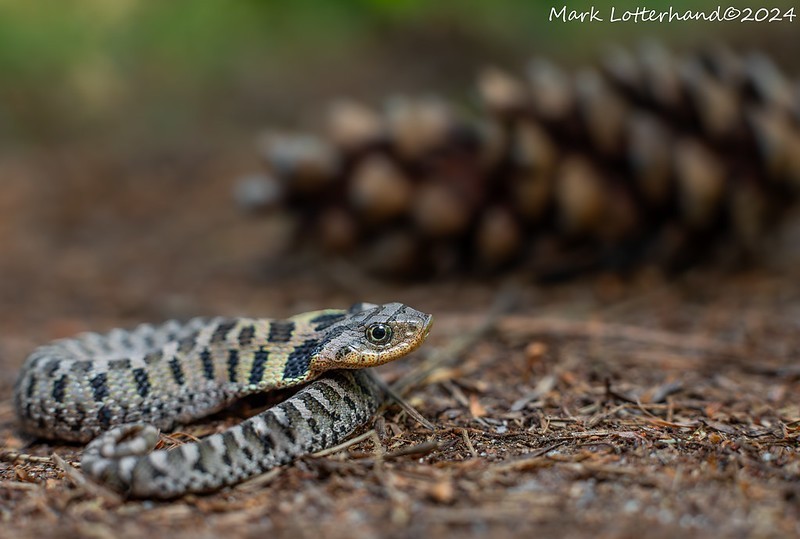
In 2025, through the help of our volunteer and staff surveys we observed 17 unique individuals and to date across two sites we have observed 48 unique individuals. For many of the snakes captured we are able to insert a passive integrated transponder (PIT) tag, allowing us to identify the individual over its lifetime. However, many of the individuals we have observed over the last three field seasons have been juveniles that are too small to PIT tag. Instead we can use photographs of each snake’s unique pattern to identify them and recognize individuals, which when combined with PIT tagging give us important individual data across years that informs our understanding of individual habitat use across the sites and their survival over multiple years.
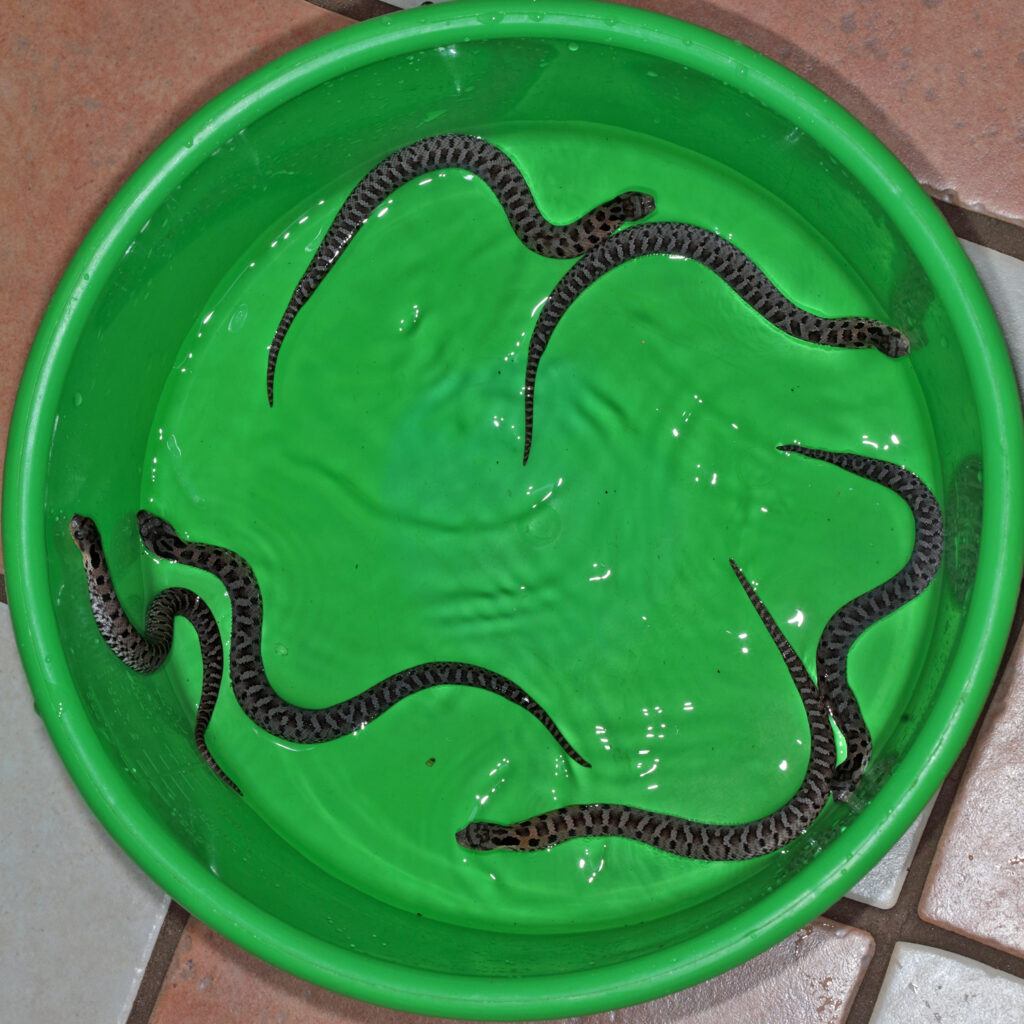
We are also conducting opportunistic nest surveys in hopes of recording and understanding nesting ecology of the species and when necessary protecting snake nests. In 2023, a nest we protected successfully hatched out, producing six incredibly tiny snakes. Each hatchling weighed just 4–6 grams, smaller than many of our turtle hatchlings! After carefully taking their weights and photos, we released the little snakes back into the wild. Then, in the following season, during one of our surveys, we spotted one of those very hatchlings again! We were able to identify the individual based on the original photographs of their distinctive dorsal pattern.
We hope to continue our monitoring of the population in the coming years and work with state partners including the Natural Heritage Endangered Species Program (NHESP) and Department of Conservation and Recreation (DCR) to develop management strategies to benefit this unique population.