
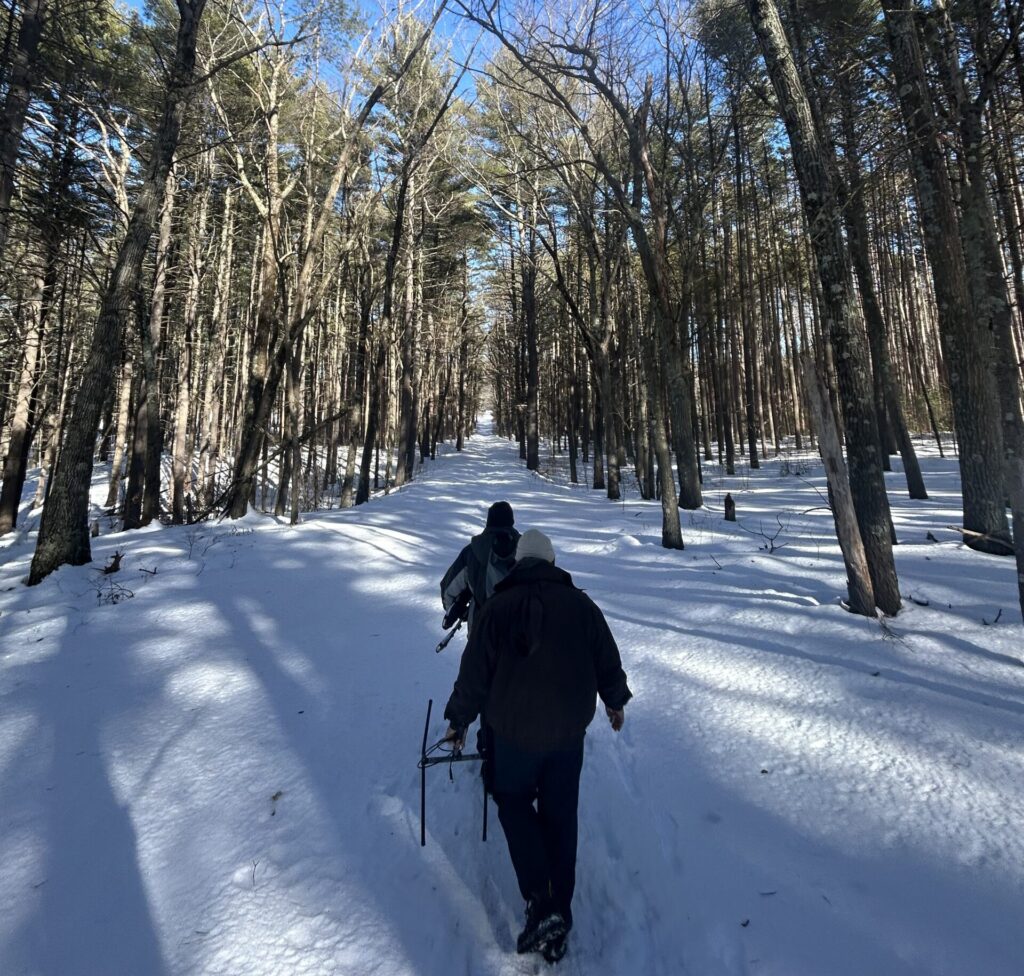
In the depths of winter, when the wetlands have sealed over with ice and the woods are hushed under snow, our staff still head out to track turtles. Using radiotransmitters glued to the shells of individual turtles, we’re able to pinpoint exactly where they’ve settled beneath all the ice and snow to overwinter — information that helps us better understand their habitat needs and more easily find them again come spring.
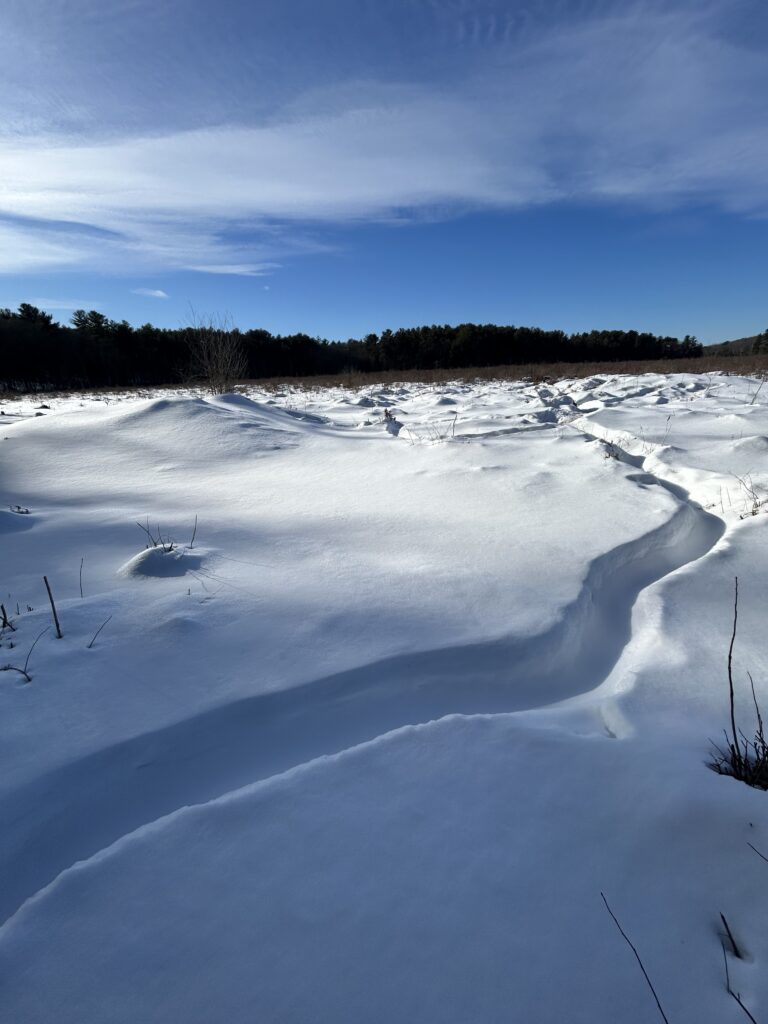
Yet even when the turtles themselves remain out of sight, the landscape offers up a surprising wealth of clues about the other animals sharing the woods and wetlands. Every walk becomes a lesson in reading signs, subtle hints that reveal who’s been moving, resting, and working while everything appears still. Winter also holds its own beauty especially after freshly fallen snow and low yellowish orange glow of the setting sun.
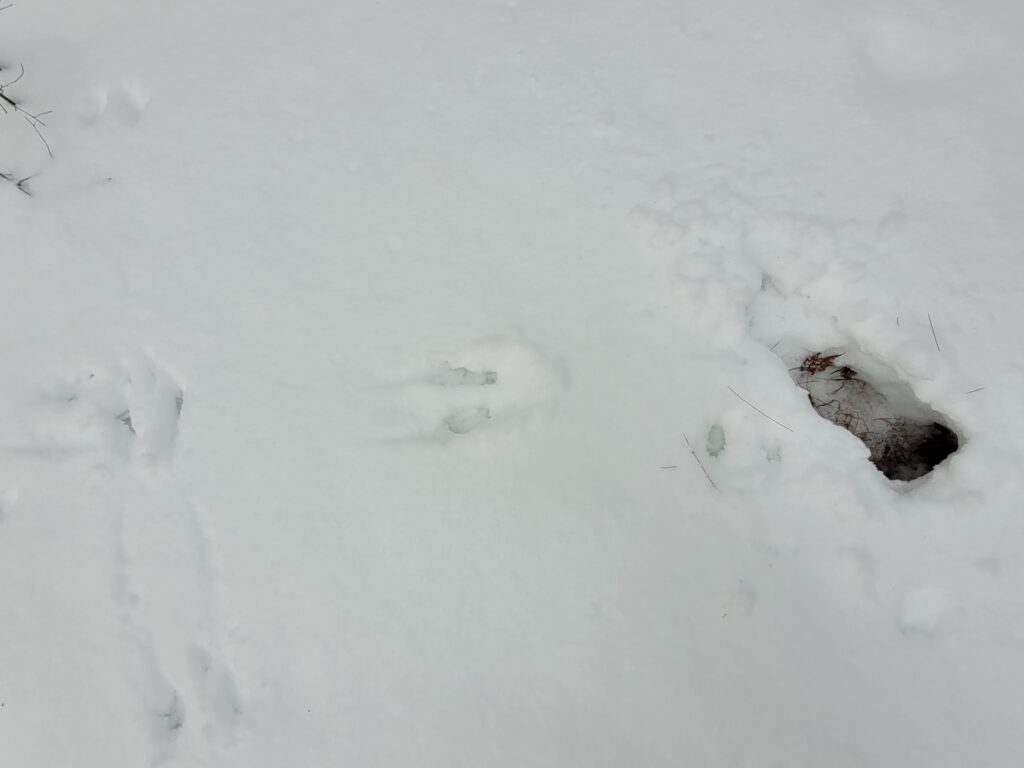
One of the first things you often spot are the tracks of grey squirrels leading to holes or caches where stashed acorns can be found. Others are the straight purposeful dog like tracks of the coyote or red fox. These are unlike the tracks of domestic dogs that zig zag in between the tracks of their owners and only go a few yards into the woods.
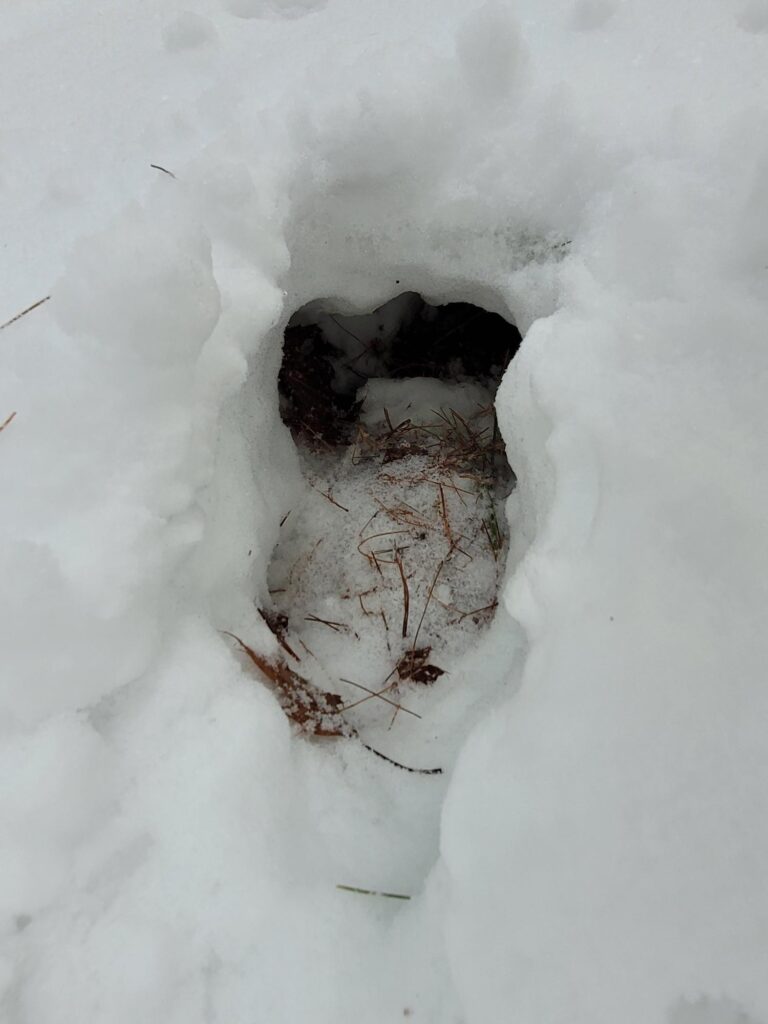
The bounding patterns of our white-tail deer crisscross in the woods. Less commonly one comes across fisher and bobcat tracks. It is noteworthy animals will often use human made trails for easy access to get from one place to another but still cut into the woods and wetlands to find food and shelter.
One of the unique signs one may see are deer beds in the snow where white‑tailed deer have rested. At first glance they’re easy to walk right past, blending into the soft unevenness of the winter snow.
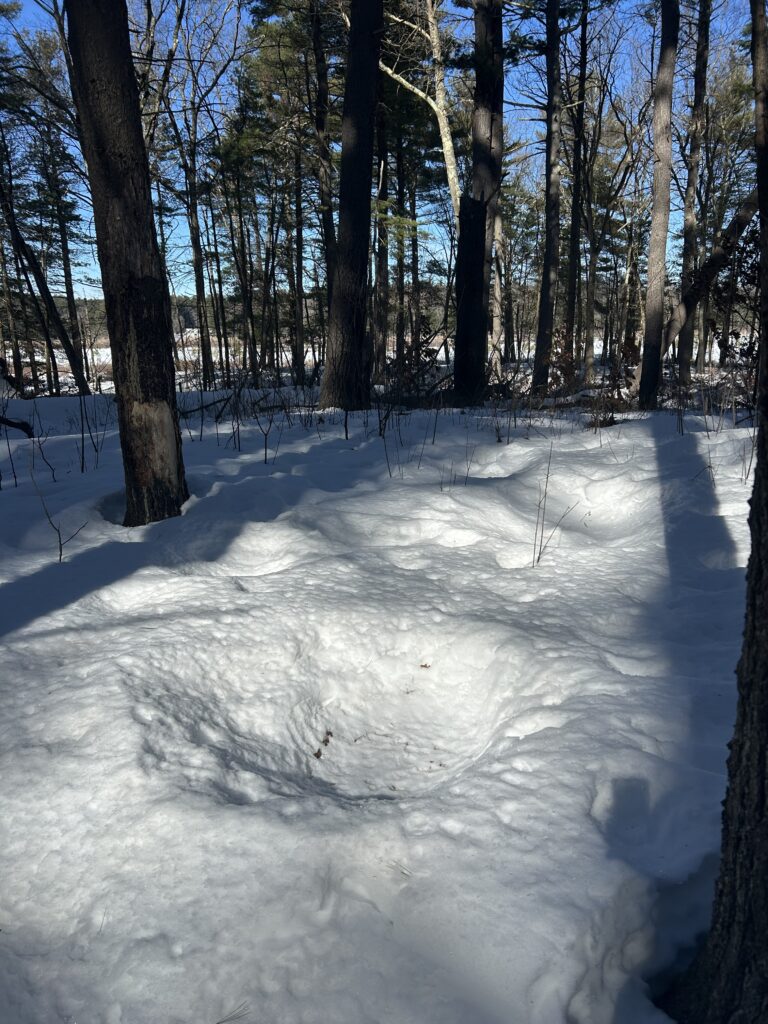
A typical deer bed looks like a neat, body‑shaped depression, sometimes with a slight rim where the deer’s warmth partially melted and refroze the snow. Often, you’ll see several clustered together, evidence of a small group hunkering down for the night. The position of the beds can tell you a lot: tucked behind a stand of white pine to block the wind or placed on a south‑facing slope to catch the weak winter sun. Often one can see nipped buds on shrubs and saplings nearby as it’s a convenient place to find food.
Ice covering the wetlands provides travel corridors for forest animals that would otherwise be less likely to want to swim, trudge or even get their feet wet during the warmer months. Coyotes often regularly travel on top of frozen beaver channels no doubt keeping an eye out for small rodents going to and from from under small wetland shrubs. Many small mammal tracks are seen with mice tending to be on top of the snow and voles burrowing just underneath.
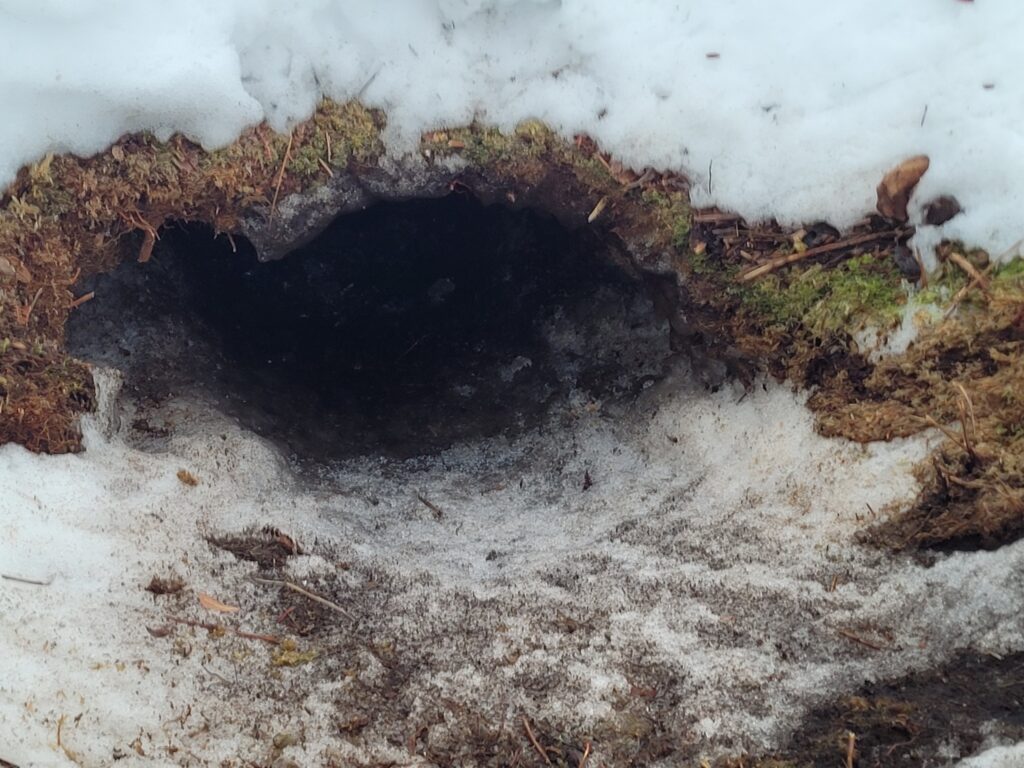
A prominent feature in the turtle wetlands is the pyramid shaped beaver lodge often hidden in thick summer vegetation but in winter the large pile of sticks is more visible. However in deep snow they may become somewhat hidden again like a big mound of snow. Among the quiet details of winter wetlands, beaver‑maintained openings in the ice stand out as particularly unusual. Made and tended by beavers themselves, these small patches of open water give them access to fresh air and a brief space to groom or rest, even when the rest of the wetland is sealed beneath ice. The beavers also use this opening as a vital ventilation hole while traveling to their winter food cache, a neatly anchored pile of branches stored underwater.
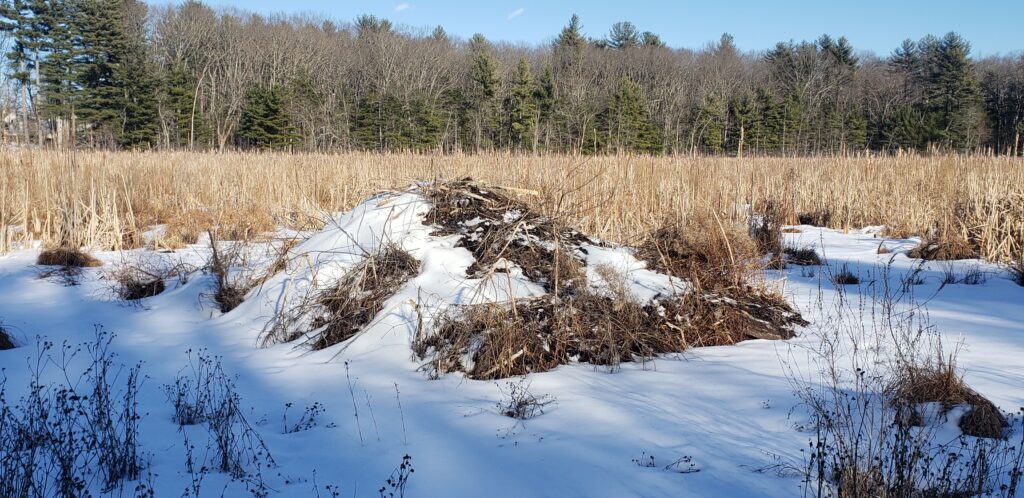
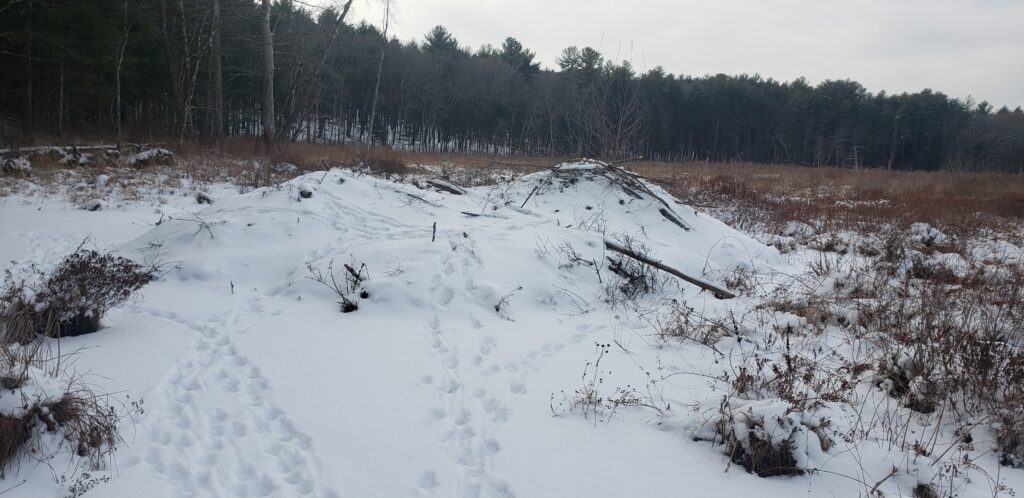
Typically the beavers swim from the lodge to the cache beneath the ice, then carry branches back inside to eat. In this way, the ventilation hole becomes an essential lifeline, supplying oxygen that allows their underwater routine to continue safely through the coldest months.
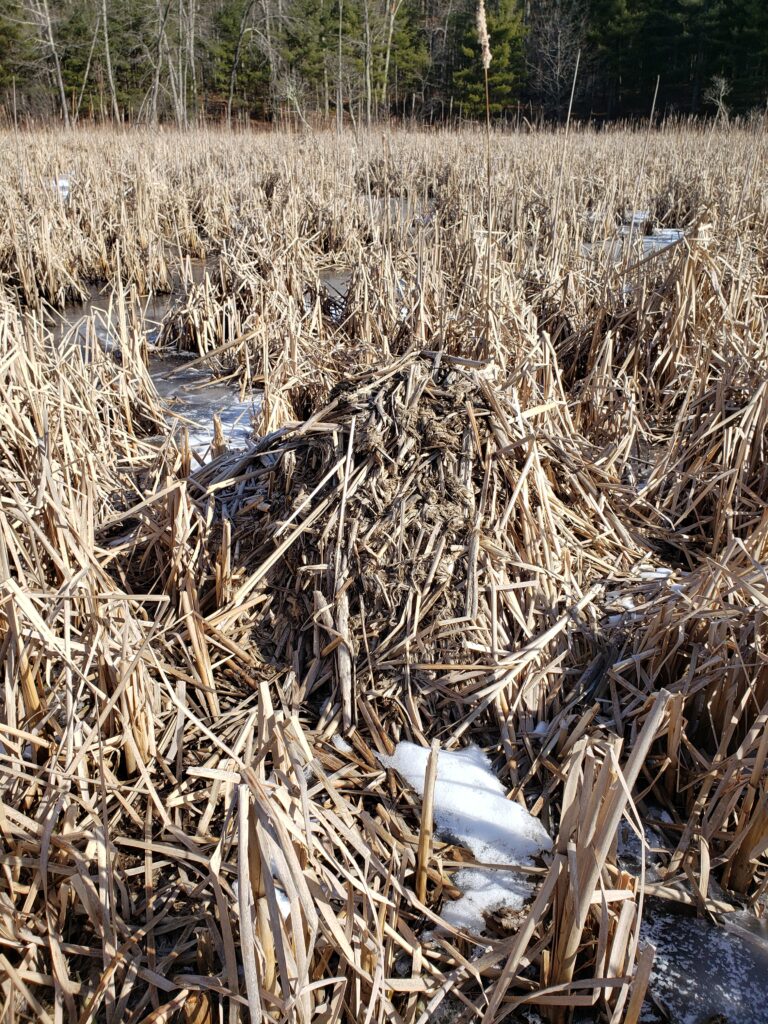
Interestingly, muskrats have been known to live in beaver lodges for the winter but generally they build what look to be mini beaver lodges that are made out of leafy vegetation such as cattails instead of woody materials.
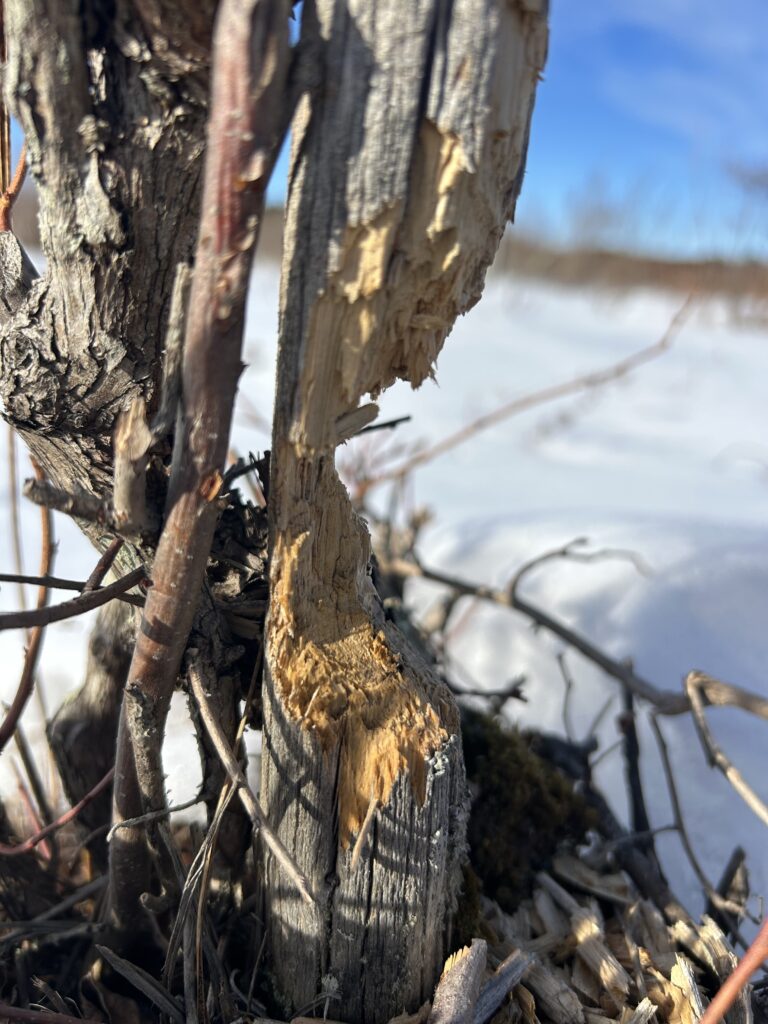
On sunny pleasant winter days, beavers may come up on land creating packed trails through the snow. They use these warmer windows as chances to add to their winter food cache, cutting down saplings and hauling them back toward the water or simply to browse in the open sun.
During deep cold winter days, they shift almost entirely to underwater travel between the lodge and their stored branches. These are reminders that while turtles rest motionless beneath the ice, beavers are very much awake, tending their lodges and ensuring their food supply will sustain them through the winter.
Winter tracking is about patience, but it’s also about presence. You enter the woods expecting turtles, and instead find a world of wildlife going about their winter survival routines.
Once deep winter sets in, however, they shift almost entirely to underwater travel between the lodge and their stored branches. These are reminders that while turtles rest motionless beneath the ice, beavers are very much awake, tending their lodges and ensuring their food supply will sustain them through the winter.
Winter tracking is about patience, but it’s also about presence. You enter the woods expecting turtles, and instead find a world of wildlife going about their winter routines.