
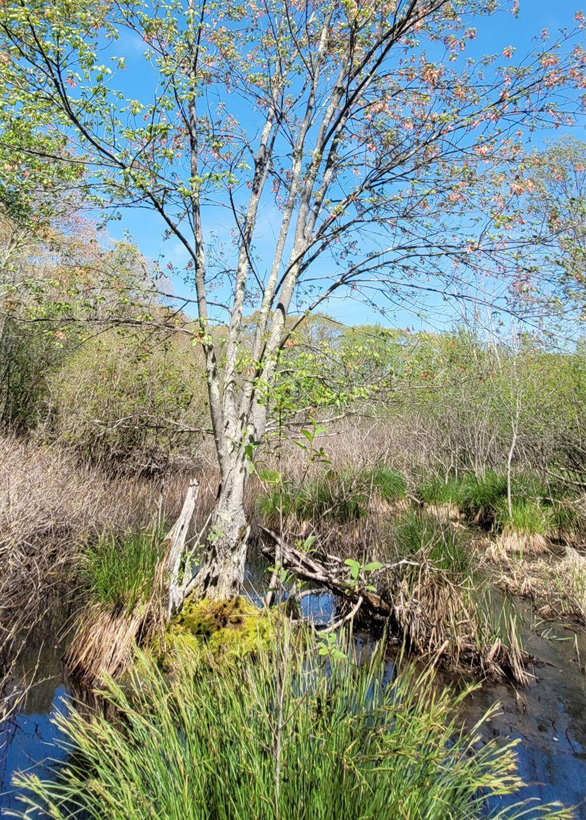
Arlington’s Great Meadows contains a very unique wetland complex in the middle of a busy suburb. Extensive wet meadows and vernal wetlands abound. Amphibians such as the wood frog and spotted salamander inhabit the strictly vernal wetlands while other frog species and turtles utilize both temporary and permanent bodies of water. Given the uniqueness of these wetlands in such an urban environment Zoo New England’s Field Conservation Department felt it would be interesting to conduct a turtle survey to determine species composition. ZNE has conducted other urban/ suburban turtle surveys such as the Arnold Arboretum and Stony Brook Reservation in Boston, Horn Pond in Woburn and Great Meadows Wildlife Refuge in Concord.
This past spring our team conducted a 2 week survey in various wetlands at the Arlington Great Meadows. There had been turtle reports from the 2001 Biodiversity Day event with one painted turtle, one snapping turtle and one spotted turtle. Also a few iNaturalist reports of painted and snapping turtles were noted especially around Peepers Pond just outside of the Great Meadow, but no formal survey had ever been done for turtles at Arlington Great Meadows.
We set 16 small hoop traps arranged at various locations throughout the wetlands. The traps have funnels on each end in which turtles can easily swim in but have a hard time figuring out how to get out (though they can if they try hard enough). Traps are staked down and are kept ½ afloat with pool noodles so turtles can come up to breathe. Traps are baited, tagged, and checked daily.
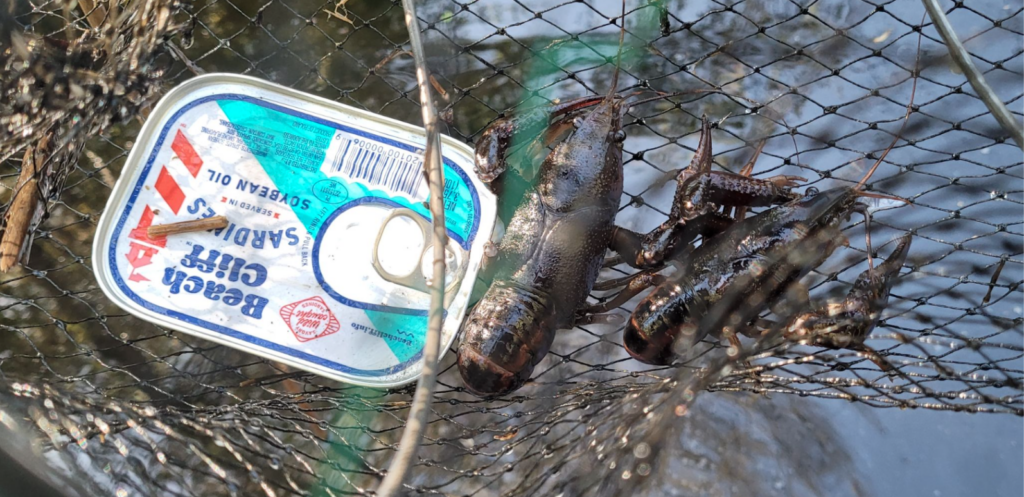
Sometimes during the trapping one might catch frogs, fish, crayfish and even water snakes on occasion. Here at the Great Meadows beside the occasional green frog the most common culprit were crayfish. The result of our survey was a bit surprising. We did not encounter any painted or snapping turtles though they certainly could occur in very low numbers. The only species we caught were spotted turtles, which was not totally unexpected given the suitable habitat they were found in.
However, for the amount of trap effort the density of turtles was low. There were a total of 17 individuals captured, 11 males and 6 females. The age ranged from the sub-adult stage of about 10 yrs old to older adults 25 plus years old. One can count the number of lines on the plastron that represent one year’s worth of growth much like tree rings but once they reach maturity in our region by 15 they spot growing and adding lines. After that the amount of plastron shell wear or smoothing is noted. The greater the shell wear the older the turtle and turtle with a totally smooth plastron could easily be over 40 or 50 yrs old.
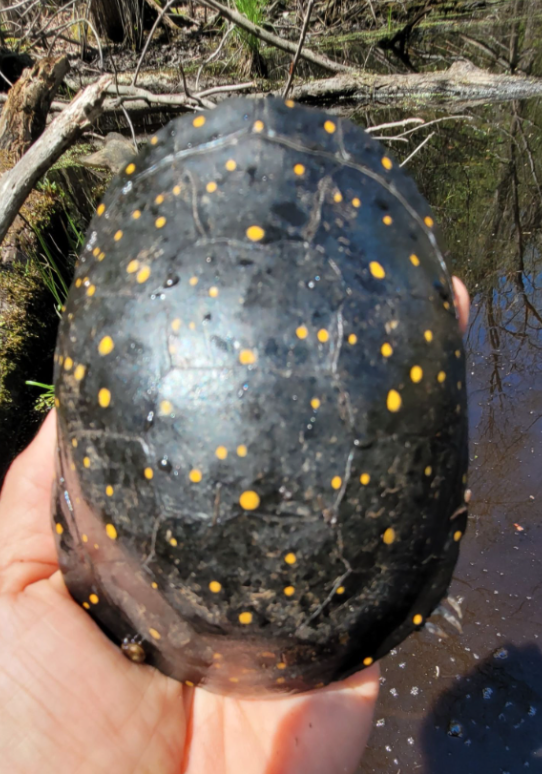
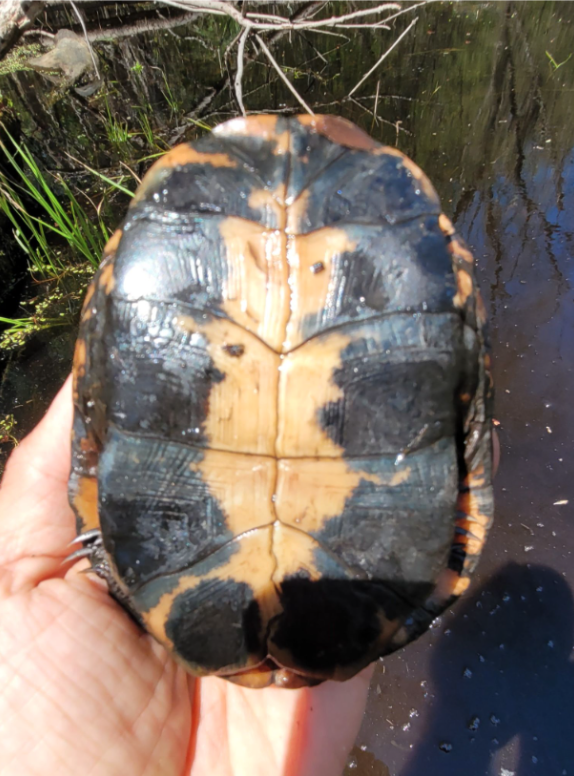
Spotted turtles often inhabit temporary wetlands that are deeper and have water in long enough to sustain populations of wood frog, spotted salamanders and crayfish. In the summer spotted turtles are commonly found in forests under leaf litter often near fallen branches or within dried wetlands under moss or root masses of wetland vegetation where it is cool and moist. Other turtle species like painted turtles need water year round. Our survey revealed that there is a small but apparently stable population of spotted turtles with very little if any overlap with painted and snapping turtles that are more common in permanent bodies of water. It would be hard to quantify a population estimate unless future surveys are conducted. None of the turtles were captured more than once and certainly we didn’t capture every individual but perhaps a general range could be between 25-40 individuals.
In all this was a great experience as when one enters into the habitat of their study subject one sees and experiences things that one would otherwise rarely encounter on the main trails. At Arlington’s Great Meadows new hidden vernal pools were found. One notices the variety and structure of the wetland vegetation in each area.
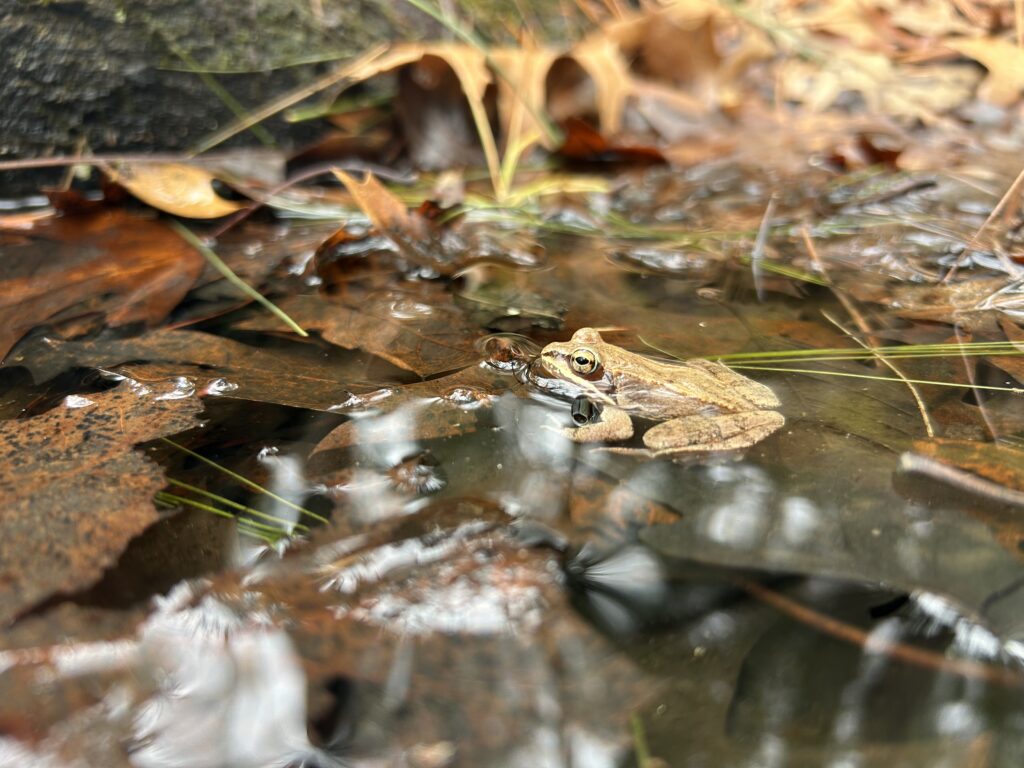
Of note; Jack-in-the-pulpit was far more abundant here than any of the numerous wetlands I’ve been to. The abundance of Amphipods in all the survey wetlands was also noteworthy. Possibly some were the state listed Mystic Valley Amphipod. Crayfish in some unexpected places. Wood frog adults and tadpoles, as well as masses of Green frog eggs were seen. Deer trails were throughout the whole area which helped in navigating dense vegetation. Even Muskrat and a Little Blue Heron observed. Many other common plants and animals of course were observed during their spring progression.
Learn more about Arlington’s Great Meadows on the Friends of Arlington’s Great Meadows website: www.FoAGM.org