
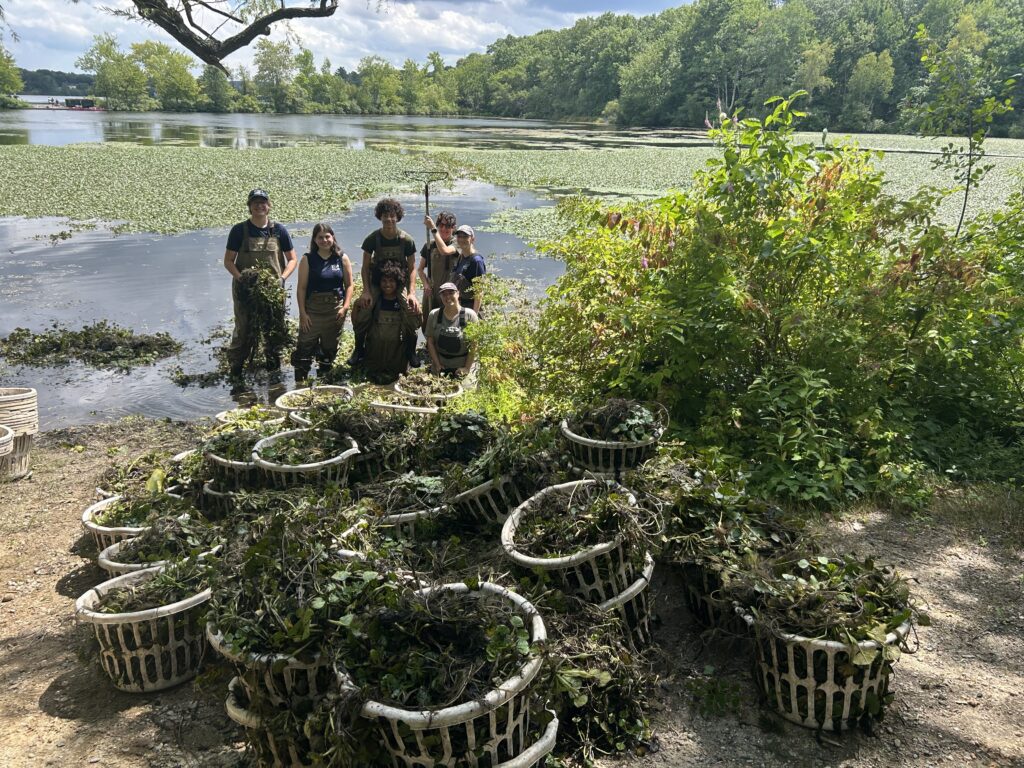
Healthy wetlands are vital habitats for fish, birds, turtles, insects, and other wildlife. Unfortunately, invasive species can quickly upset that balance, and one of the most aggressive aquatic invaders in Massachusetts is water chestnut (Trapa natans).
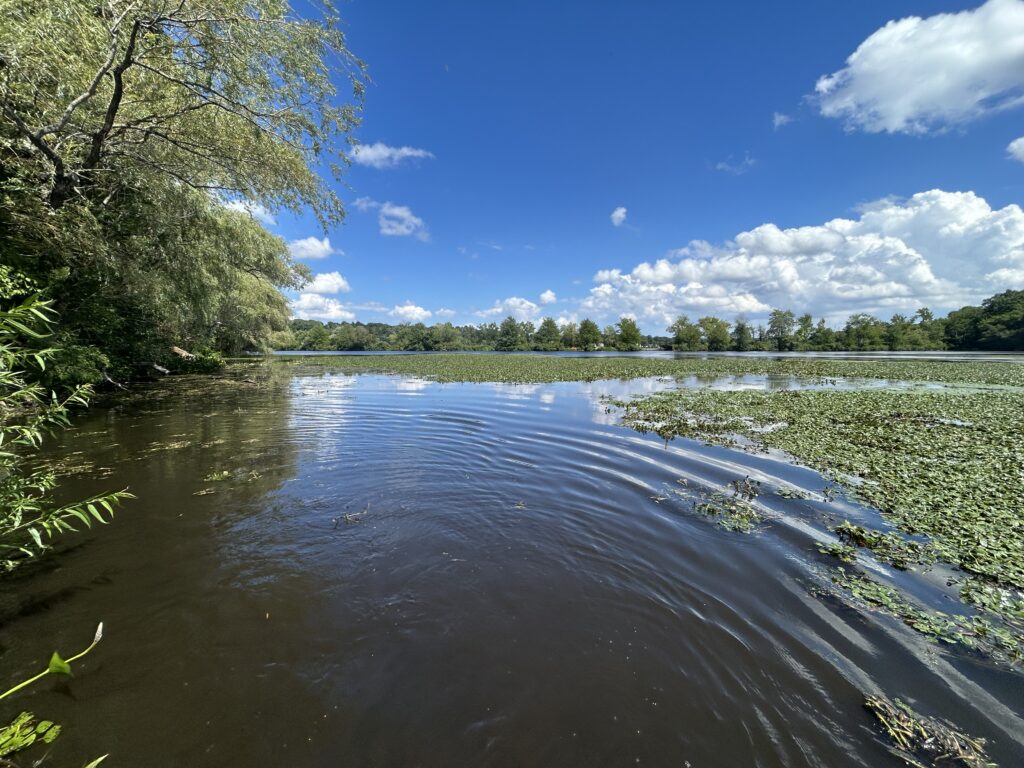
Water chestnut is a floating aquatic plant that forms dense mats across the water’s surface and these thick mats can have serious consequences for local ecosystems. As the plant spreads, it blocks sunlight from reaching underwater vegetation, making it difficult for beneficial native plants to grow. Native plants provide critical food, shelter, and breeding habitat for wildlife. When water chestnut takes hold, it reduces habitat quality for fish, turtles, waterfowl, amphibians, and countless aquatic insects. Thick infestations can also limit access to open water, making it more difficult for birds and other wildlife to feed, nest, and move throughout the ecosystem.
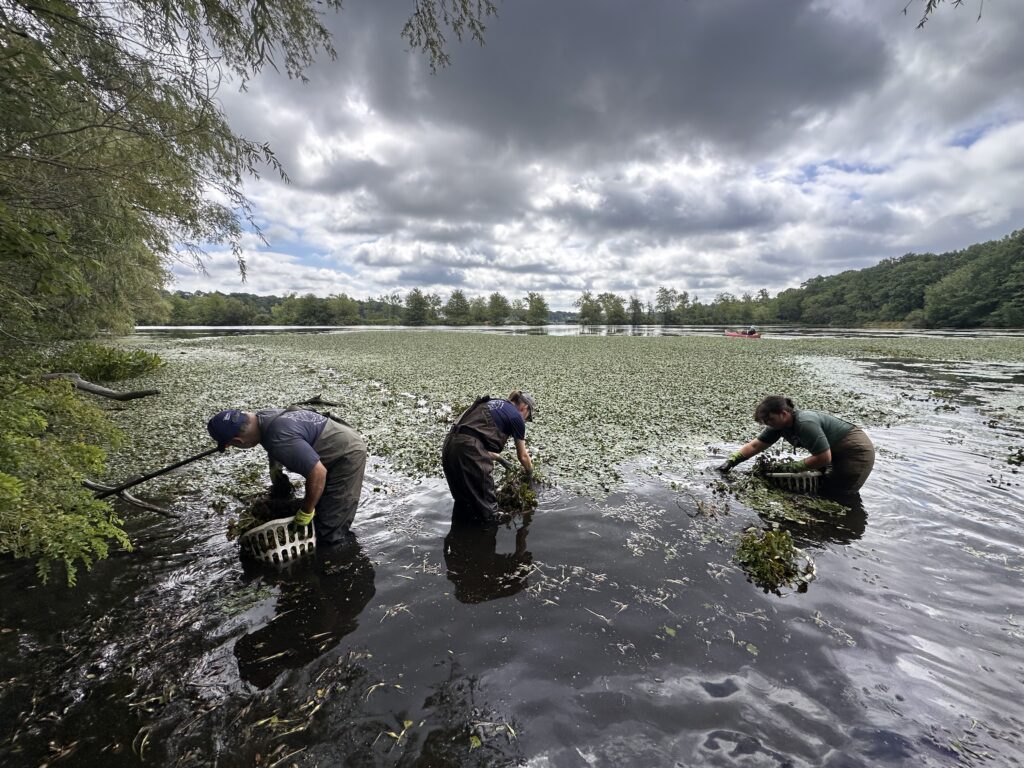
That’s why we’ve partnered with the Friends of Horn Pond to help combat this invasive species. This week, members of Zoo New England’s Conservation Department, Conservation ZooTeens, and Horticulture Department joined Friends of Horn Pond volunteers in removing water chestnut by hand before it can disperse new seeds.
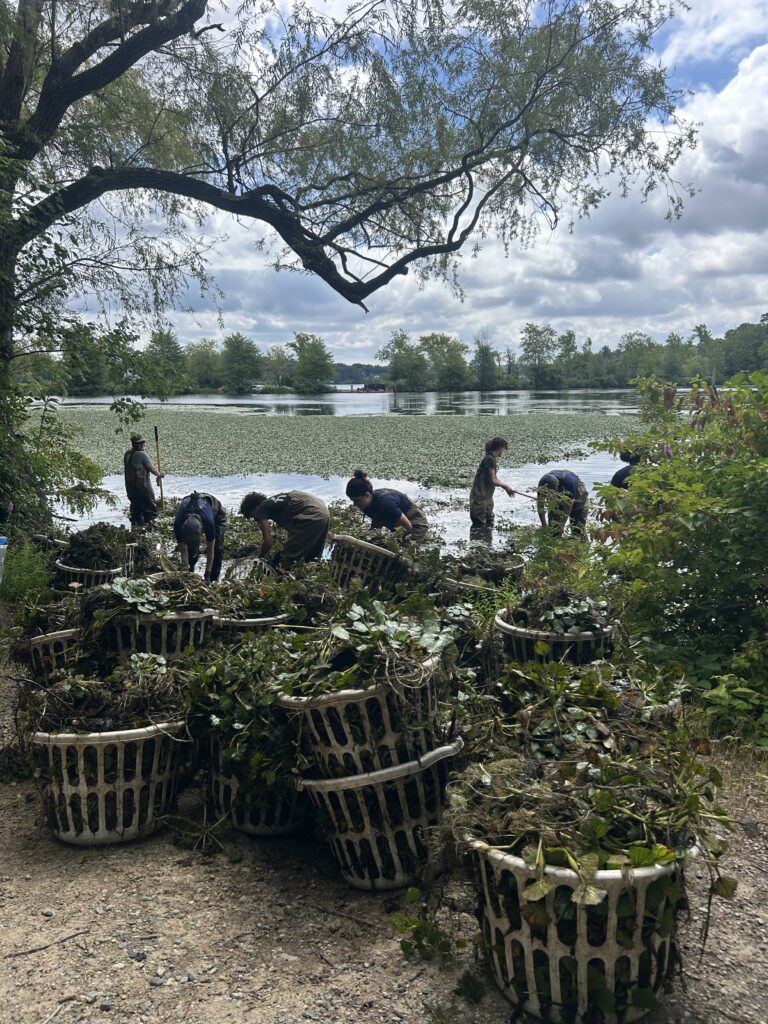
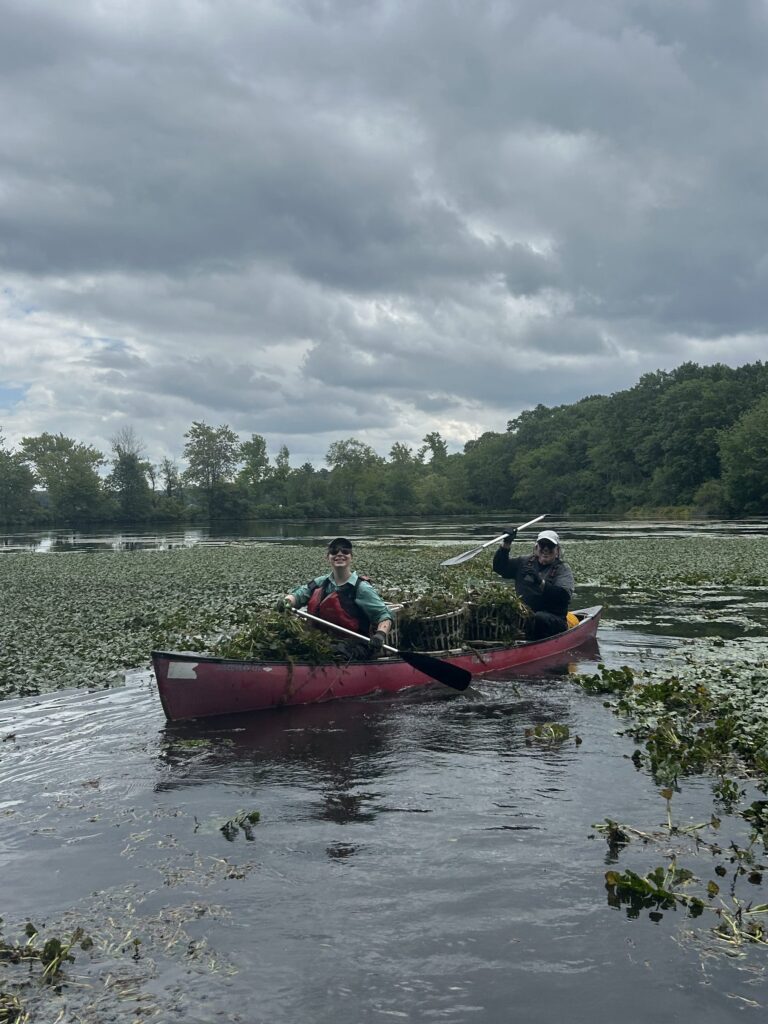
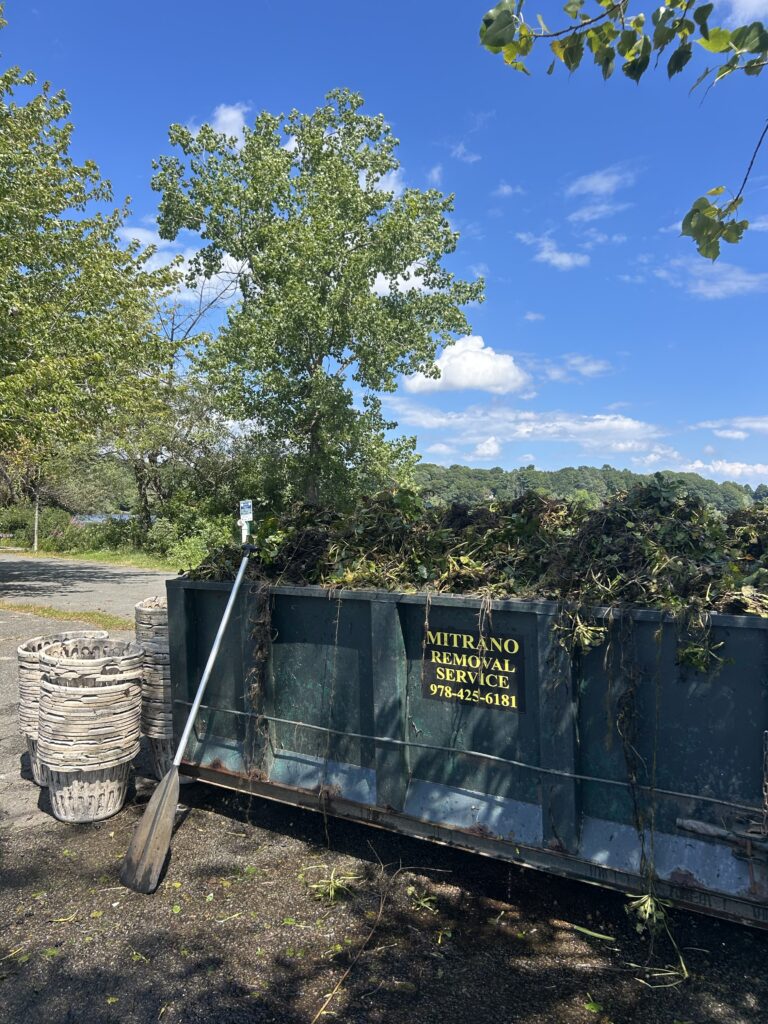
The Friends of Horn Pond have already hosted several well-attended volunteer events this summer dedicated to water chestnut removal. Their efforts have made a meaningful impact, but a walk around the lagoon makes it clear that more work remains. Continued community involvement will be essential to restoring and maintaining healthy habitat for wildlife.
To better understand how water chestnut may be affecting wildlife in the area, we’ve also begun a new turtle trapping and monitoring session to compare with data collected at the same site two years ago. While it’s possible that dense water chestnut growth has caused turtles to disperse to other pools and wetlands nearby, this monitoring effort will help us better understand how local turtle populations are responding to changes in habitat conditions. By combining habitat restoration with wildlife research, we can gain a more complete picture of the challenges facing Horn Pond and help guide future conservation efforts.
Check out our findings from our first Horn Pond turtle survey conducted in 2024, and stay tuned for this year’s results as we continue to monitor how habitat changes may be affecting local turtle populations