
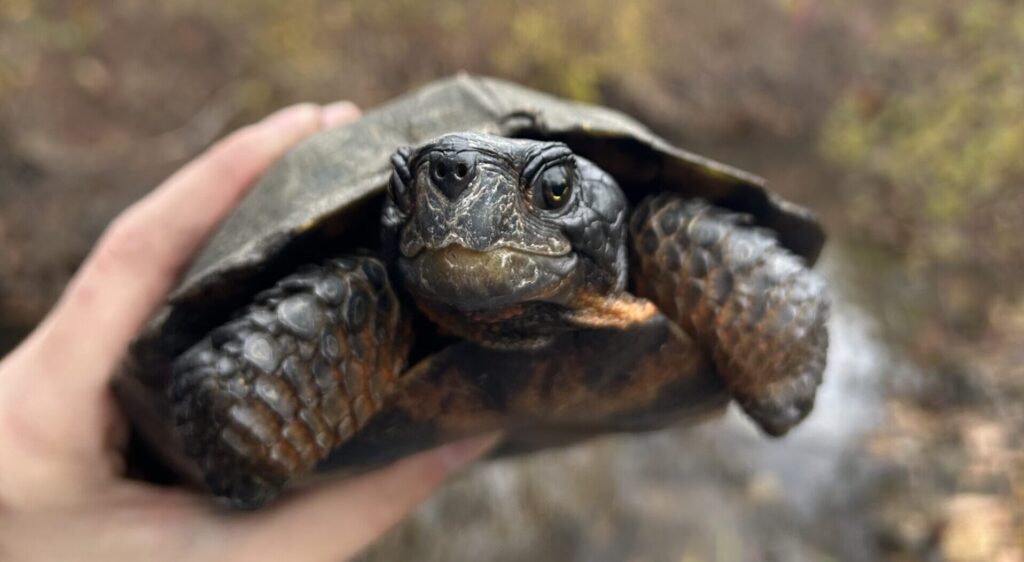
As many of you know, Zoo New England has been working hard to uncover the mystery behind wood turtle mortalities at several of our field sites. When we release our headstarted turtles back into the wild, we track a number of these individuals to learn how they adapt and which habitats they prefer. Sometimes, though, the story ends in heartbreak, an empty shell or a claw-marked radio transmitter tells us a predator struck. While headstarted turtles have a much better chance of survival than those hatched in the wild, life in the wild is still perilous for turtles of all ages, and we’ve found this to be especially true for wood turtles in particular.
We’ve gotten pretty good at protecting baby turtles, whether they’re still eggs in a nest or hatchlings getting a head start in a classroom. But once those turtles are released into the wild, the challenge becomes far more complex. That’s when the real question emerges: who, or what, are we trying to protect them from?
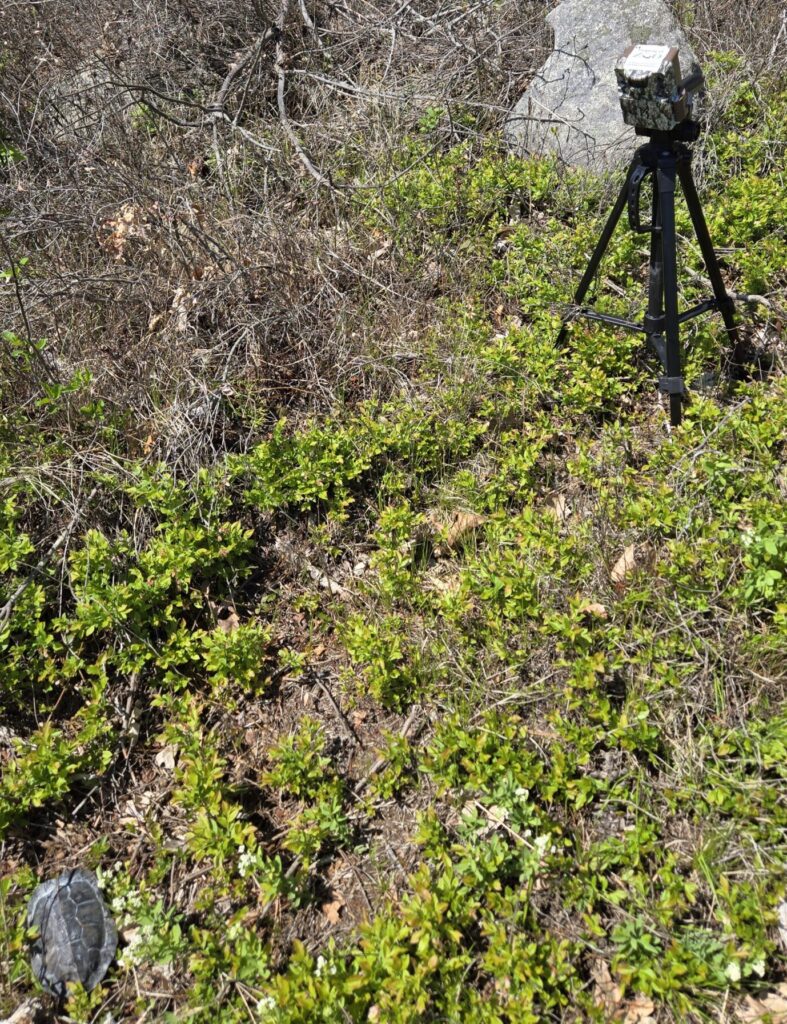
In our last update, CSI: Wood Turtles, we highlighted our approach to solving this mystery: camera traps and 3D-printed ‘decoy turtles’ to watch predator behavior in action. We positioned game cameras, each aimed at a headstart-sized decoy wood turtle, in known wood turtle habitat within 100m of streams where our study populations reside.
This gives us a unique window into predator patterns, helping us uncover whether turtles are being deliberately hunted or simply falling victim to chance encounters or scavenging after succumbing to other causes.
The video footage will also provide insights into the foraging behavior and handling strategies of predators when they encounter a turtle – at least until they realize they have been fooled with a fake turtle.
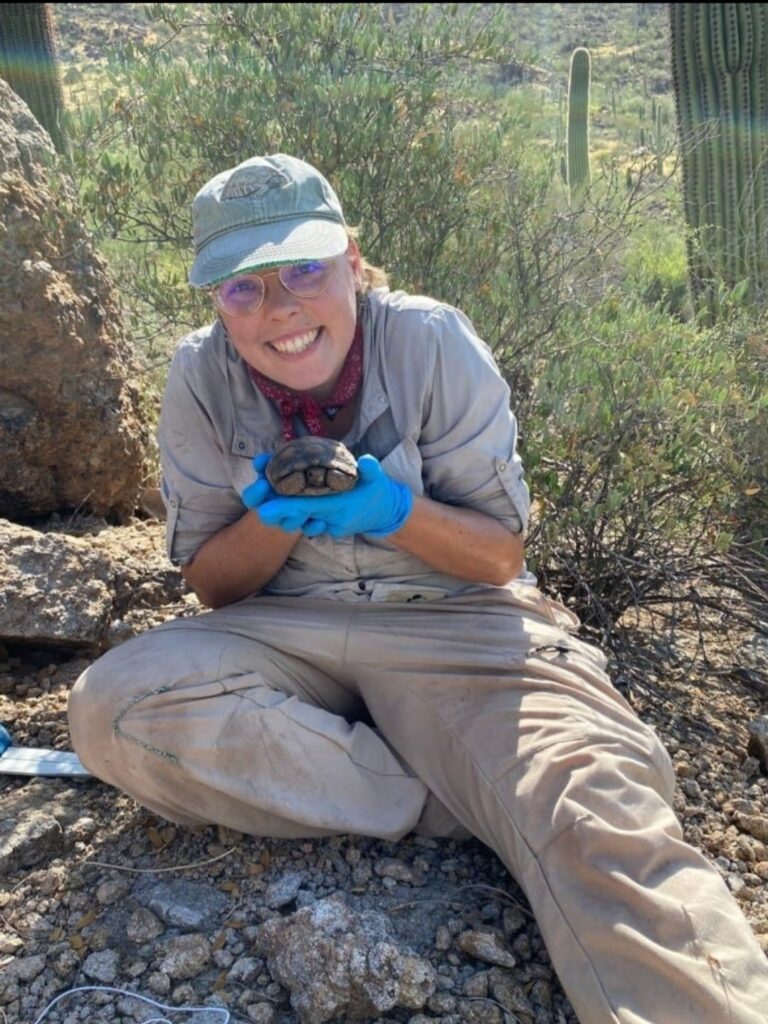
This season, we raised the bar by welcoming Julia Joos, our newest team member and Postdoctoral Fellow. Julia is leading the charge on wood turtle predation research, bringing fresh ideas and energy to the project. Her expertise runs deep, before joining us, she spent 5 years studying three species of desert-living tortoises across the Sonoran and Chihuahuan Deserts in the Southwestern US and Mexico. She started out her research career by investigating climate-related body size patterns in the European pond turtle – a close relative of our beloved Blanding’s turtle – and supporting sea turtle conservation in the Mediterranean. Her experience with multiple turtle species across different environments now shapes her innovative work here.
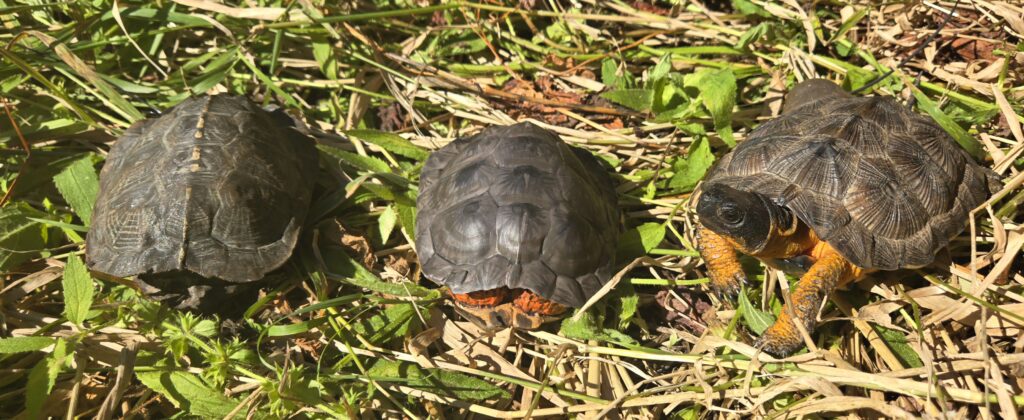
We’ve also continued to perfect our 3D-printed decoy turtles in collaboration with Hardshell Labs and RCG Defense. They now feature realistic arms and legs with that characteristic pop of orange and are flawlessly hand-painted to look just like the real thing. But not all predators hunt only by sight, especially mammalian predators rely heavily on scent cues. That’s why, alongside the decoys, we’ve deployed scent tubes at our camera trap stations, either as a standalone or paired with a turtle model to combine the visual and scent cues. These tubes contain water from our wood turtle headstart tanks or collected by keeping one of our wild wood turtles in a tub with water overnight, providing an authentic scent that can attract predators.
So far, we’ve collected around 250 hours of footage in the form of 10 second video clips. We’ve reviewed a portion of the material manually so far (< 5%), but we’ve already spotted raccoons, coyotes, minks, bobcats, river otters and a slew of non-predatory species frequenting our cameras and interacting with our setups. We are currently exploring different options to quantify this wealth of observations via automatic video processing software and involving volunteers to review videos and characterize species identifications and behaviors – so keep an eye out for how to participate in the data processing in the next few months!
The insights from the camera data will guide our next steps as we work to deter these predators from targeting wood turtles. Next season, we plan to refine our approach with aerosol spray devices mounted on decoy turtles, as ideally, when a predator interacts with a decoy, the device releases a noxious-tasting spray that discourages future attacks, as seen in this test footage.
So far the predators still have the upper hand: Initial video footage shows opossums and raccoons dismantling and rubbing themselves on the supposedly noxious turtle models:
With some fine tuning this winter, however, we hope to have these devices ready for action in the spring! In addition, we are considering other intervention strategies for our next field season, like laying false scent trails leading to mock turtles to teach predators that following a turtle scent trail will not result in a reward, i.e. a meal.