
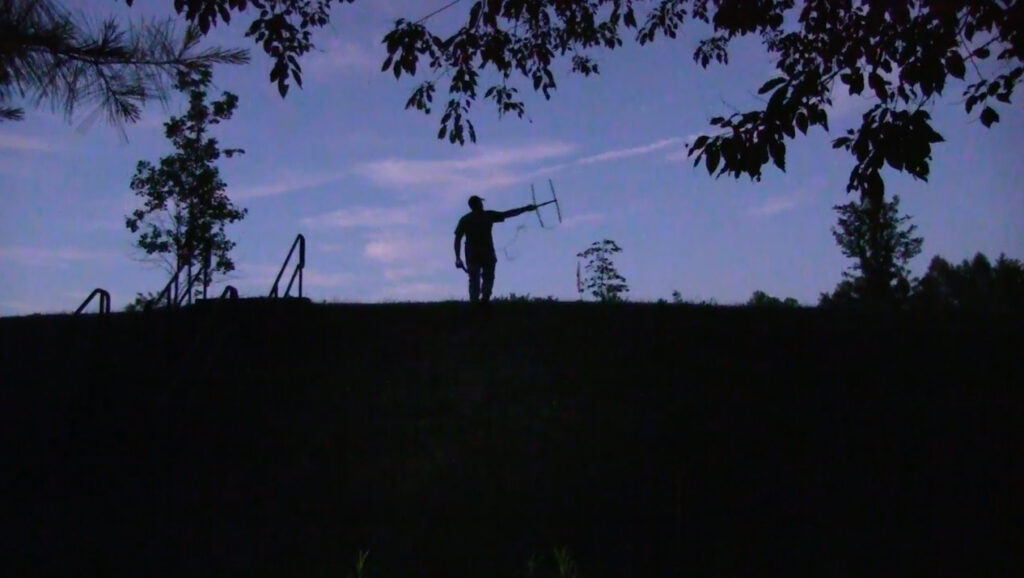
For more than 20 years, our conservationists have spent every June evening radio-tracking adult female Blanding’s turtles at Great Meadows in Concord, hoping to catch their annual journey upland to lay their eggs. This year, we reached an exciting milestone: protecting our 200th Blanding’s turtle nest at this important site.
These surveys look a lot different from our usual turtle tracking, as we don’t need to track down the turtles in the water, only those up on land. Our conservationist starts every evening by walking up to the site’s overlook tower and listening to 20+ different turtle radio signals. From these signals, they can determine whether a turtle is still in the water and unlikely to nest that night, or whether she has moved onto land and may be preparing to lay eggs.
Turtles that appear to be on land are then carefully tracked and observed from a distance throughout the evening. Some nights require our conservationists to play the role of patient turtle babysitters, watching a single female investigate multiple nesting sites before deciding whether any meet her needs. Other nights, especially during the peak of nesting season, several turtles may be on land in varying locations across the site. On those evenings, our conservationists strategically move from one turtle to another, balancing the need to monitor multiple nesting females while trying not to miss a nesting event elsewhere.
Blanding’s turtles are reliable in that they routinely come up on land around dusk and nest in the evening, but depending on the individual, some will spend hours and hours digging just to give up on a spot and settle down in a bush for the night. This means long, uncertain hours in the field for our dedicated conservationist. A hopeful evening can stretch into the early morning, ending at 4 a.m. with a turtle disappearing into a bush and no protected nest to show for the effort.
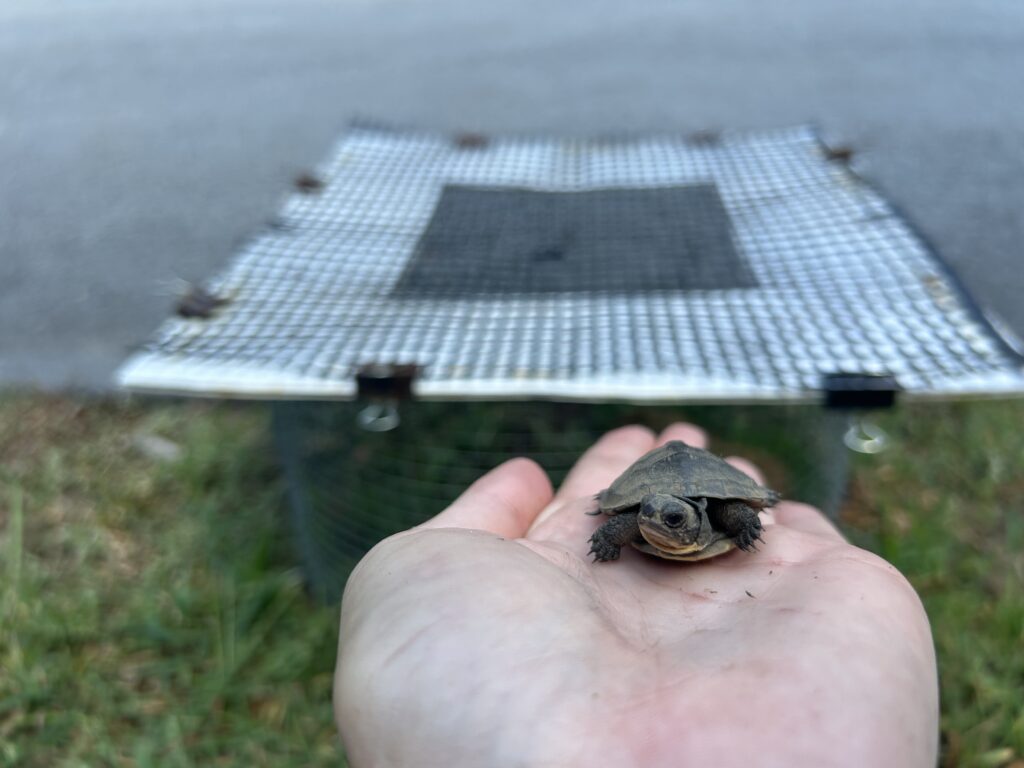
Yet our team has persevered and succeeded 200 times at this single site alone, protecting hundreds of eggs and future hatchling Blanding’s turtles.
This success would not be possible without the tireless efforts of our field biologists, volunteers, and even local neighbors who look out for and report turtles.
Their dedication and persistence have produced extraordinary results. Thanks to their efforts, more than 800 baby Blanding’s turtles have successfully received headstarts and been returned to the wild with greatly improved odds of survival.