
Our conservation team has been experimenting to better understand the predators that interact with local turtle populations, especially through the clues they leave behind. Turtles may carry the evidence of these encounters on their shells in the form of bite marks, scratches, or lost limbs. Despite visible gouges on turtle shells and radiotelemetry equipment, matching predators to marks is a challenge. Many species leave behind similar damage, and we don’t know which chewing happened when– predation and scavenging are very different, ecologically speaking. Without witnessing the interaction, the details are tantalizingly vague. Our goal in this study is to look behind the curtain at what it might look like when a predator interacts with a radiotelemetered turtle.
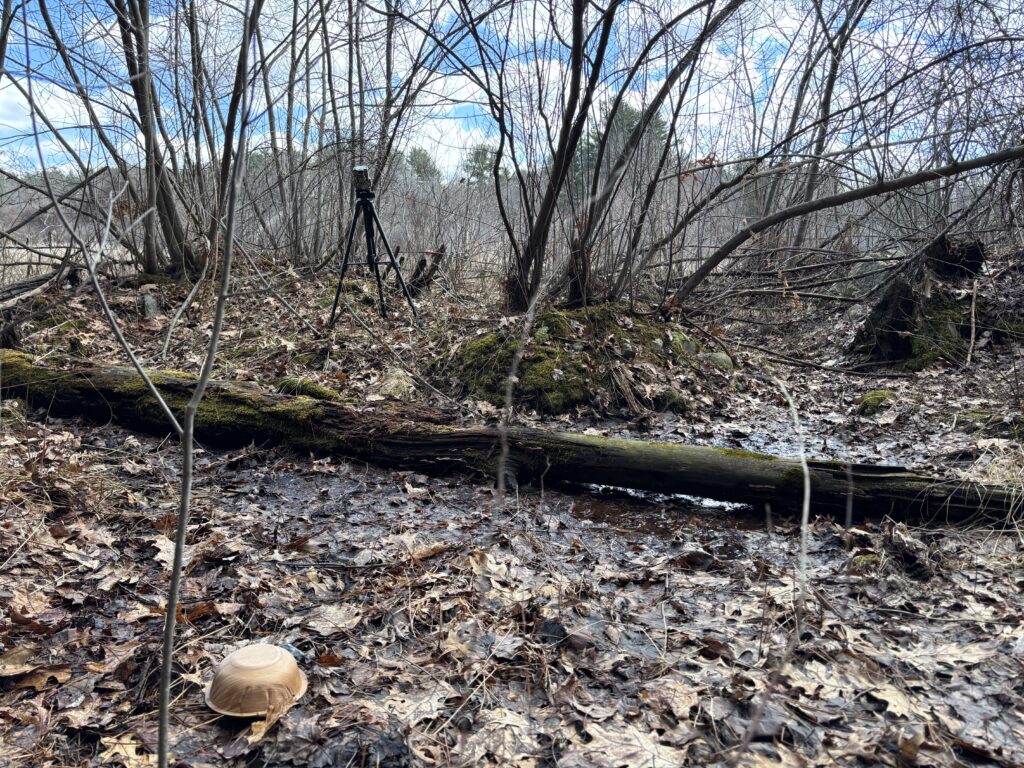
To do that, we’re combining two simple tools: sturdy bowls and trail cameras. The bowls resemble a turtle’s shell because of their size, shape, and curved surface. We place them in habitats where we’re already monitoring turtle populations and add sardine oil to attract predators. We can then observe this interaction with the trail cameras and directly link a predator to the marks it leaves behind, rather than guessing after the fact.
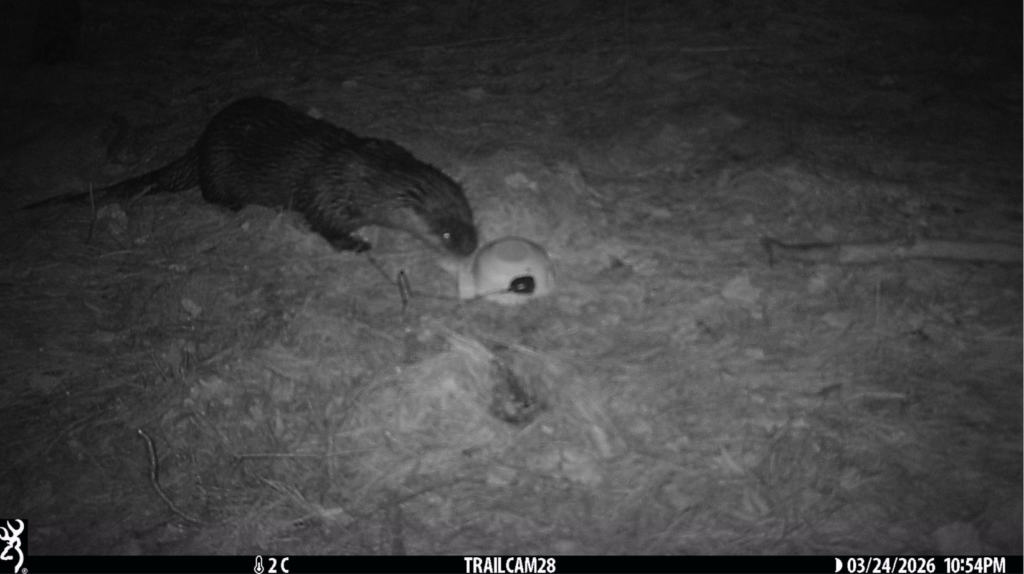
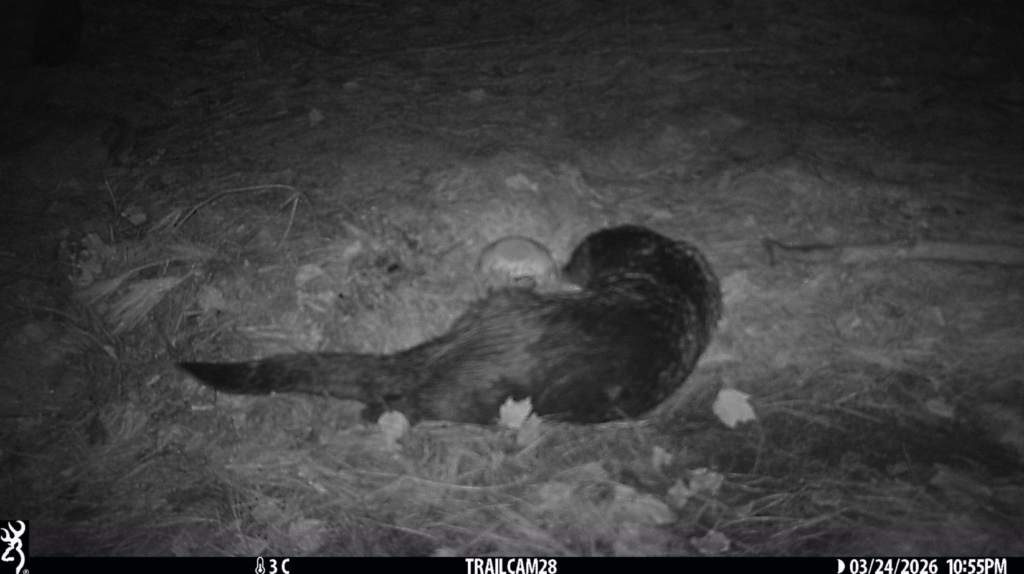
Over time, we hope to build a visual and physical record that shows how different species interact with the bowls and what their unique “signatures” look like. A raccoon’s bite marks differ from those of a fox, and both look different from the damage left by a bird of prey. Seeing these behaviors unfold on camera may allow us to confidently identify predators to species when we later encounter similar markings on real turtle shells in the field.
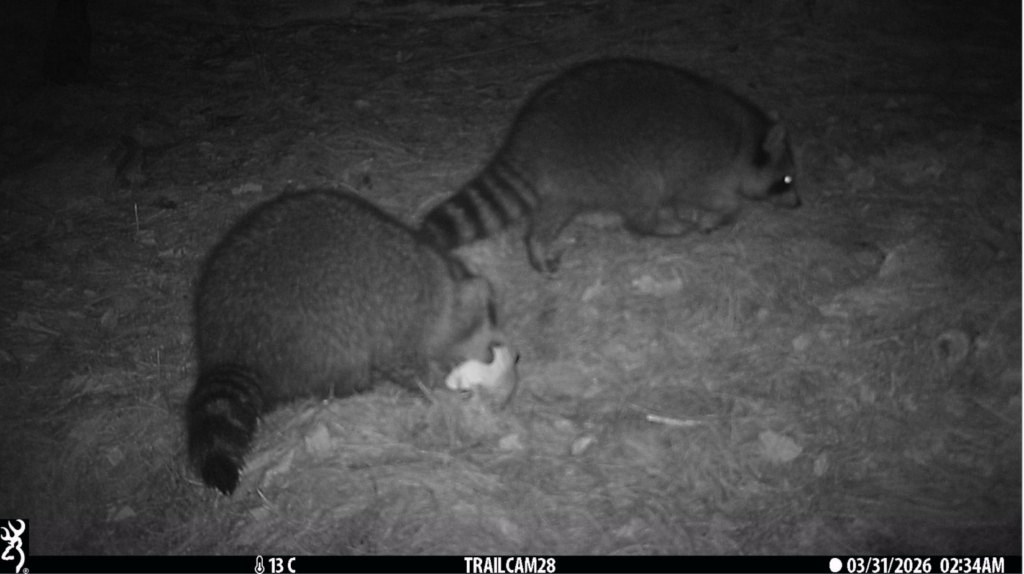
Although our study is still in its early phases, we have already made some interesting observations that could prove helpful as we learn more. For example, while we have seen many raccoons spread throughout our study areas, species like otters have been spotted far fewer times, and only in specific spots. Patterns like these can help us better understand which predators are most active at which sites, and which species pose the greatest threats in certain areas. By linking areas with the highest turtle mortality with the predators we know use those spaces most heavily, we can focus where our conservation efforts might be most effective.
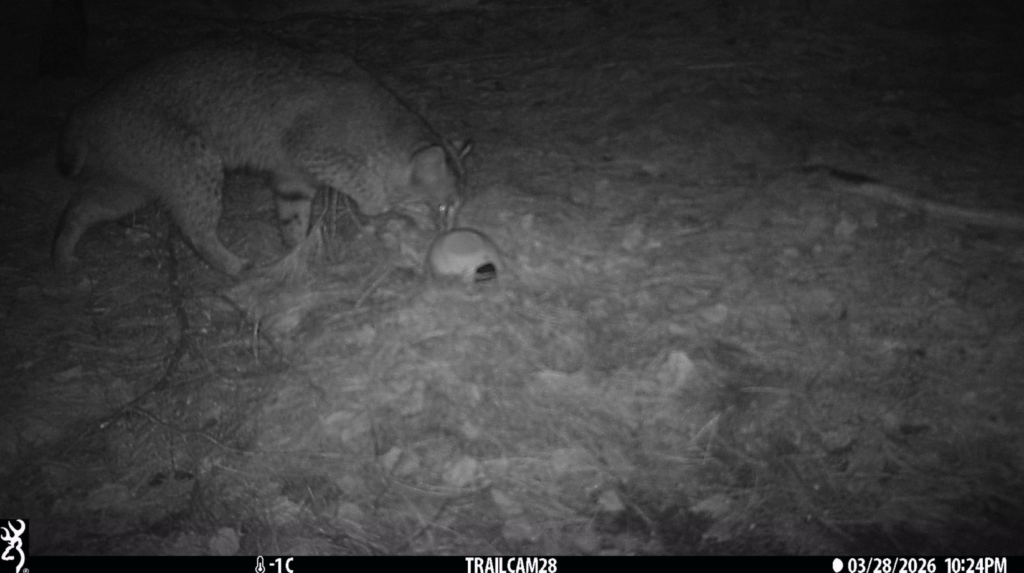
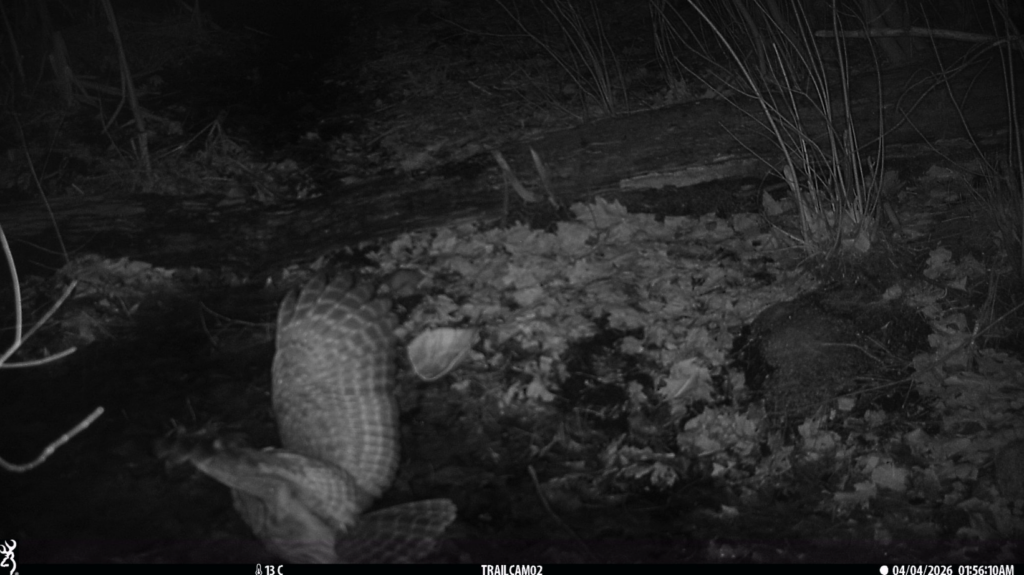
One of the most exciting aspects of this research is how accessible it is. It doesn’t rely on expensive or highly specialized equipment, yet it has the potential to produce meaningful, actionable data. With every new video clip, we’re learning how to more clearly read the stories written on the shells of these threatened turtles, and use that knowledge to better protect them. Stay tuned for opportunities to review these videos as a citizen scientist on Zooniverse!