
I recently wrapped up another one of my very favorite activities, participating in the Wildlife Conservation Network’s Rising Stars Graduate Scholarship Program. This program awards scholarships to help cover costs for Masters or PhD studies to young wildlife conservationistsand wildlife veterinarians from lower income countries, and also to North American Indigenous (Tribal) conservationists.
This year we awarded 15 scholarships to wildlife conservationists from countries ranging from Myanmar to Zimbabwe; 4 scholarships to wildlife veterinarians from countries such as Namibia and Nigeria; and 2 Indigenous scholarships, one from the Nez Perce Tribe and the other from the Rosebud Sioux and Hopi Tribes. Universities these young scholars will attend include such esteemed institutions as Oxford, Cambridge, and UC Santa Cruz.
Rather than just provide a list of all 21 scholars, I thought it might be interesting to do a deeper dive on a few of the recipients, which might also help to explain why providing these scholarships is such an immensely gratifying experience.
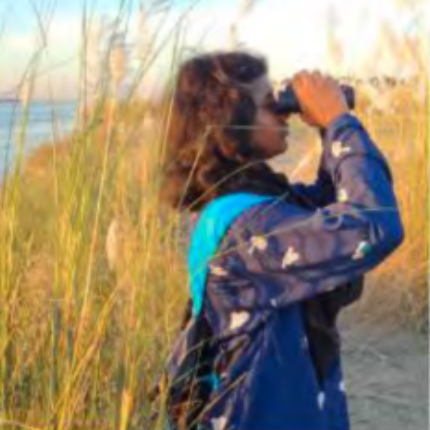
Fariha Iqbal grew up in a suburb of the Ganges floodplain in northwestern Bangladesh. Seeing the consequences borne by both wildlife and local communities, she began to leverage community-based approaches and research to find solutions to protect biodiversity while improving community well-being.
With no suitable platforms for local conservation, she began her conservation journey by co- founding a youth-driven local conservation club in 2017. Their wildlife surveys confirmed at least twelve threatened bird and mammal species in particular hotspots. The club aimed to protect these habitats using awareness and education to transform community behavior. With that goal, Fariha led engaging community programs, securing support from multiple internationally competitive conservation grants and government funding. She advocated for these overlooked habitats nationally and internationally. After eight years of persistent effort, her team achieved inspiring positive outcomes, including a reduction in hunting and increased government focus.
Fariha also led a research project exploring hydrometeorological anomalies and migratory waterbird habitat suitability using advanced GIS and machine learning tools, co-authored multiple papers, and holds key roles on multiple national and international platforms – all with just an undergraduate degree! She now intends to pursue her Masters at either Oxford University or the University of Wisconsin-Madison, with a particular focus on threatened riverine migratory bird conservation in the Ganges-Padma riparian zone in western Bangladesh, an ecologically critical area.
She states, “I view conservation not merely as an academic interest, but as a personal responsibility, and I continue to explore how community-based conservation and scientific research can bring about the changes I have long envisioned.”
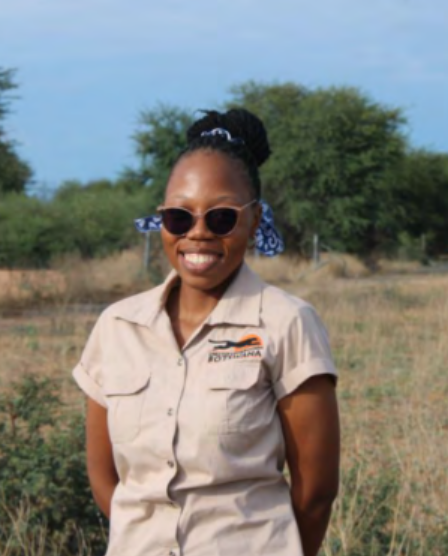
Refilwe Pearl Baatweng grew up in Botswana. In the fourth grade her class took a field trip to the Central Kalahari Game Reserve, where an initial fear of seeing lions (she saw none) led to curiosity about the big cats and other wildlife. This interest led to getting an undergraduate degree in both economics and environmental studies. She joined Cheetah Conservation Botswana in 2023 and in two short years worked her way up to Senior Officer responsible for conservation outreach to local communities.
Refilwe will be pursuing a Masters at Tarleton University in the USA, where she will assess levels of behavioral change that have resulted from Botswana’s conservation programs and livelihood initiatives. She will look at how people’s attitudes, knowledge, and practices have shifted, and how those shifts benefit community-based conservation. This will help build an understanding of what supports or limits sustainable resource use and community conservation action.
She states, “I have seen that effective conservation depends on ecological protection and sustainable livelihoods. I understand the importance of creating opportunities that reduce dependency on natural resources, allowing communities to thrive while ecosystems are preserved. This perspective motivates me to care for the environment we share, not just for myself, but with and alongside everyone else.”
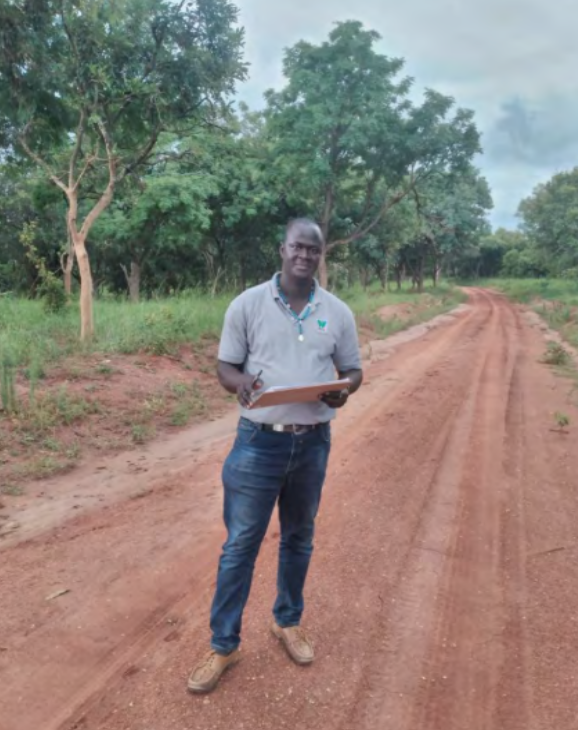
Ernest Oniba grew up in Uganda, in an area adjacent to Murchison Falls National Park, which had a major influence in his burgeoning interest in wildlife conservation. Ernest quickly developed a deep commitment to safeguarding wildlife and promoting sustainable coexistence between humans and nature. After an undergraduate degree in tourism and hospitality management at Makerere University in Kampala, Ernest found his way into working for various conservation organizations in the country, including Uganda Wildlife Conservation, WildAid, and the Wildlife Conservation Society. He has been involved in a variety of wildlife conservation initiatives focused on species monitoring, habitat protection, and community engagement.
Ernest will now return to Makerere University to pursue his Masters. His specific course of study within the Environmental Management Program will focus on human-wildlife conflict, with an emphasis on understanding the interactions between humans and elephants in Murchison Fall Protected Area, Uganda.
Ernest says, “I am committed to returning to my conservation role after the program and using the knowledge gained to enhance conflict mitigation strategies, improve community outreach and contribute to policy discussions on coexistence. I view this opportunity as an investment that will yield long term benefits for wildlife, local communities and national conservation goals.”