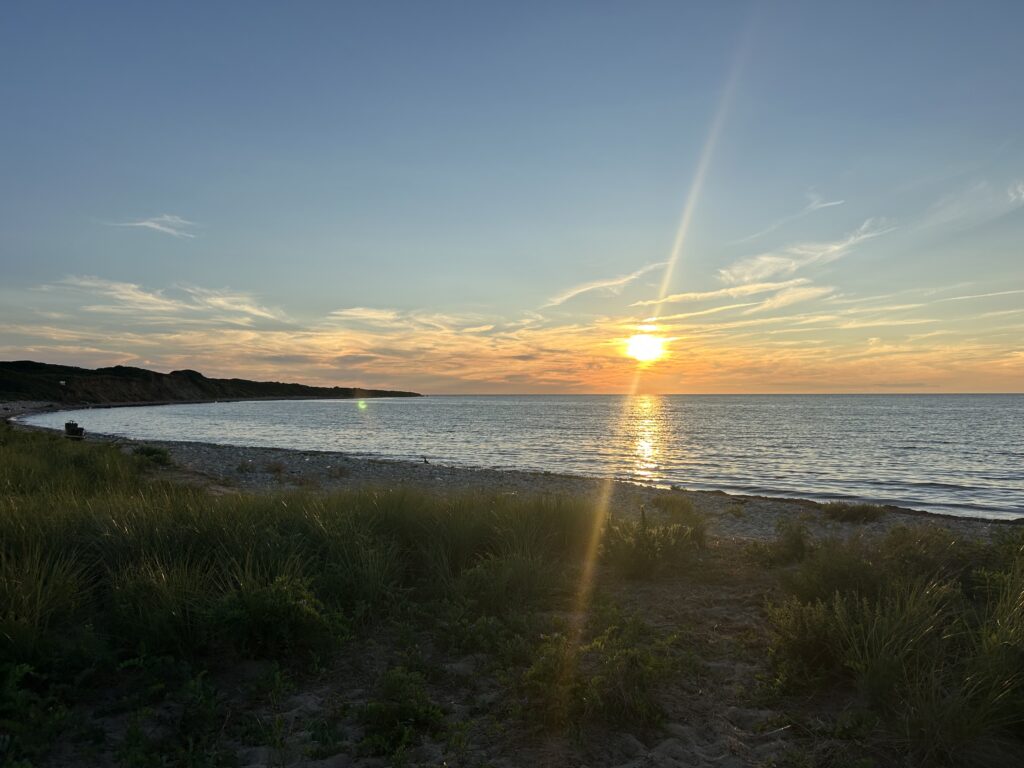
An uninhabited island with no fresh water, little shade, more poison ivy than you could ever imagine, and a few hundred rare New England cottontails. That was what awaited me and two equally adventurous colleagues when we volunteered to assist with a trapping session on Nomans Land Island as part of our partner project, the New England Cottontail Conservation Initiative.
Background on the Bunnies
The New England Cottontail Conservation Initiative is a collaboration among state, federal, and partner organizations working across the species’ range to conserve the New England cottontail. This effort includes intensive habitat restoration, captive breeding programs, behavioral research, and population monitoring. Zoo New England recently joined the working group to help stage captive-bred cottontails before their release, and now we’re also assisting with on-the-ground field efforts.
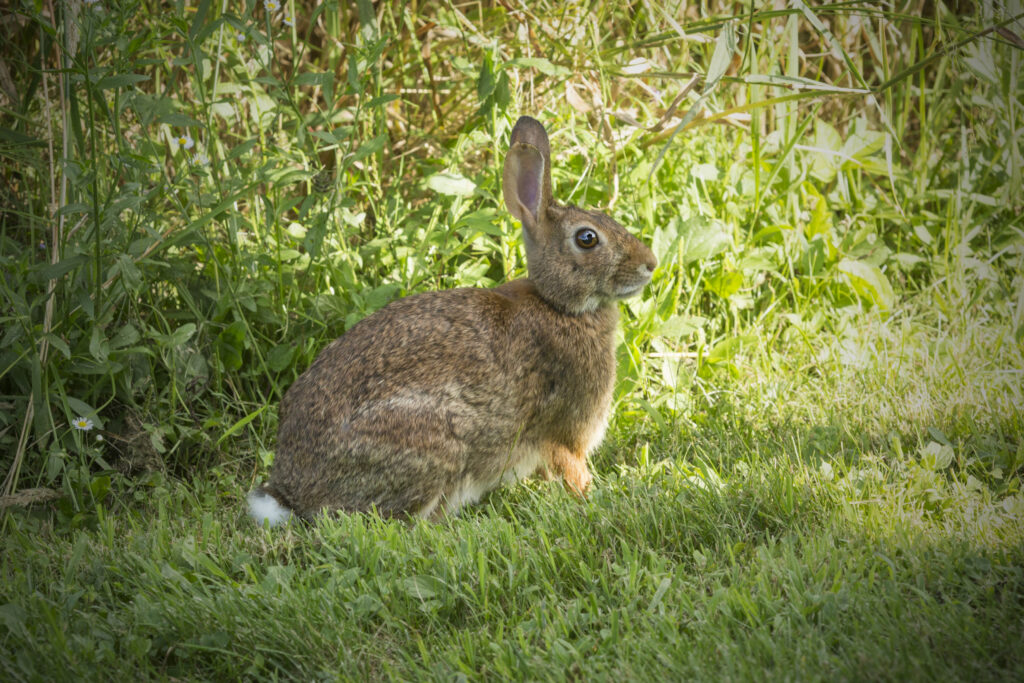
Despite being New England’s only native rabbit species, the New England cottontail is so rare that even avid outdoors enthusiasts are unlikely to encounter one. And if they do, they likely won’t even realize it. New England cottontails closely resemble the introduced eastern cottontail, a species brought to the region in the early 20th century as a game animal. While the two species do not interbreed, they compete for habitat. As human development and land-use changes have fragmented the dense young forest habitats that New England cottontails depend on, eastern cottontails have expanded across much of the region and displaced the native species from large portions of its historic range.
To help reverse this decline, biologists began searching for suitable locations to establish new New England cottontail populations. In 2011, surveys of several small islands off the coasts of Massachusetts and Rhode Island identified promising habitat. Among these sites was Nomans Land National Wildlife Refuge, which contained the dense thickets that provide cottontails with food and shelter. Since then, the refuge has become one of several locations where captive-bred New England cottontails and their offspring have been released to establish new populations. The natural isolation of islands makes them especially valuable for conservation efforts because it limits interactions with introduced species and creates protected environments where populations can grow and become established.
Setting Sail
As part of a small team of eight representing several organizations, including Zoo New England, the U.S. Fish and Wildlife Service, MassWildlife, and the Maine Department of Inland Fisheries and Wildlife, we loaded a week’s worth of camping equipment, food, water, personal gear, and more than 40 rabbit traps onto a small boat. With everything packed aboard, we set off past Martha’s Vineyard toward Nomans Land Island.

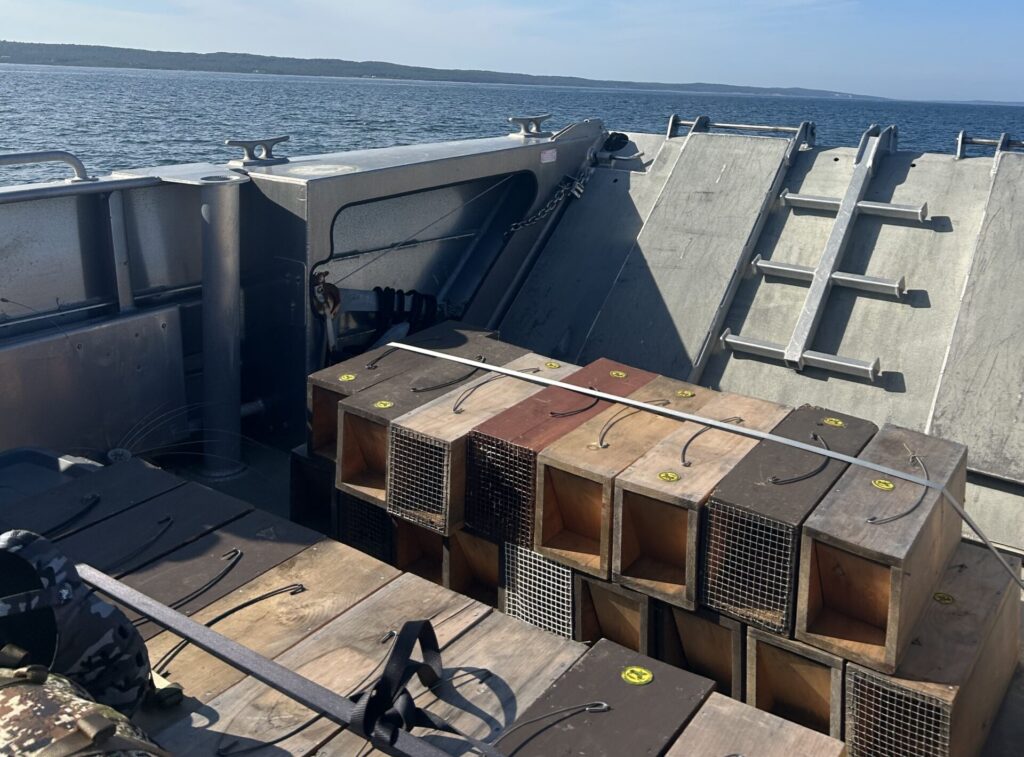
Surprisingly, the rabbits have no need for a dock. Because the island is uninhabited, arriving there is far less luxurious than one might imagine for an island retreat. The boat pulled as close to shore as conditions allowed, and half of our crew climbed into the water while the rest of us passed gear overboard one item at a time. The challenge was staying upright while navigating slippery cobblestones, avoiding the boat’s wake, and carrying a week’s worth of supplies across the shoreline. Once everything was safely ashore, we searched for a suitable location to establish camp and begin setting our rabbit traps.
Hunting Wabbits
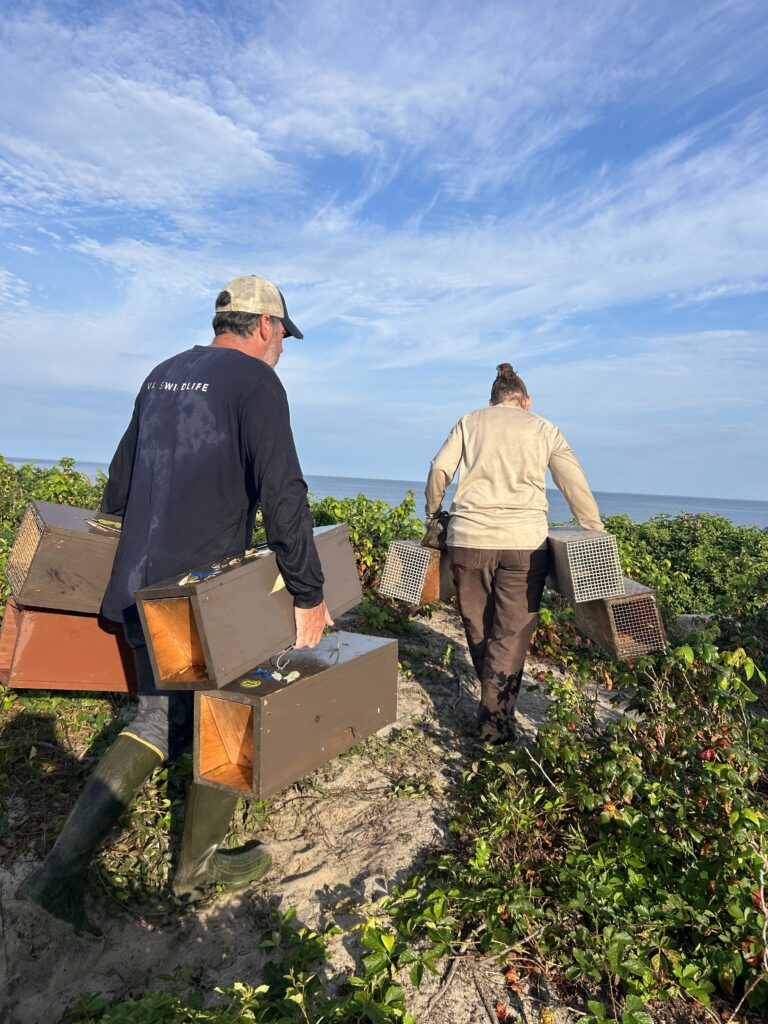
In previous years, field teams had enjoyed remarkable trapping success on the island, capturing double-digit numbers of rabbits in just two days. Naturally, we hoped for similar results. Carrying as many traps as our arms could manage, we trekked across the island, revisiting areas where rabbits had been frequently captured in the past. The rabbits collected through these efforts contribute to the ongoing breeding program designed to strengthen and supplement other populations.
As the sun beat down on us and our hands grew sore from hauling traps across rough terrain, we became increasingly suspicious. Despite searching habitats that had once shown abundant rabbit activity, we found little to no evidence of their recent presence. Still, we remained optimistic. We baited each trap with fresh apples and even sprayed apple cider around them to strengthen the scent and tempt any nearby rabbits from their hiding places. By sunset, we had finally placed, baited, and recorded every trap. The work for the day was done.
All that remained was to enjoy a well-earned bowl of ramen while watching the sun sink beyond the horizon. As darkness settled over the island, we headed to our tents dreaming of a morning filled with rabbits waiting in our traps. Stay tuned for Day 2!