
We all woke up early to begin our day at 8:00am on Tuesday. After the essential cup of coffee and a quick breakfast, the seven of us discussed our game plan for the day: check the traps first, then get any captured bunnies into crates with food and water as quickly as possible. All bunny crates were placed under a canopy to keep them cool from the hot sun. If the number of bunnies caught was lower than our goal of five, we would move traps to other locations. Since we had 39 traps to check, we decided to split up into two groups. One group of four went to check traps west of the campsite, while the other group of three, which included me, headed east of the campsite.
Out of the 39 traps, only one New England cottontail was captured. It was found along the upper edge of the dune near a large thicket of shrubbery and was the last trap checked on our route. This was a far cry from the 12 cottontails caught on the first night back in 2024. A few traps had apple pieces missing from just outside the trap entrance, where they had been placed to entice a bunny, while others had closed trap doors but were empty. This could have been the work of a bunny, bird, or even a mouse investigating the trap.
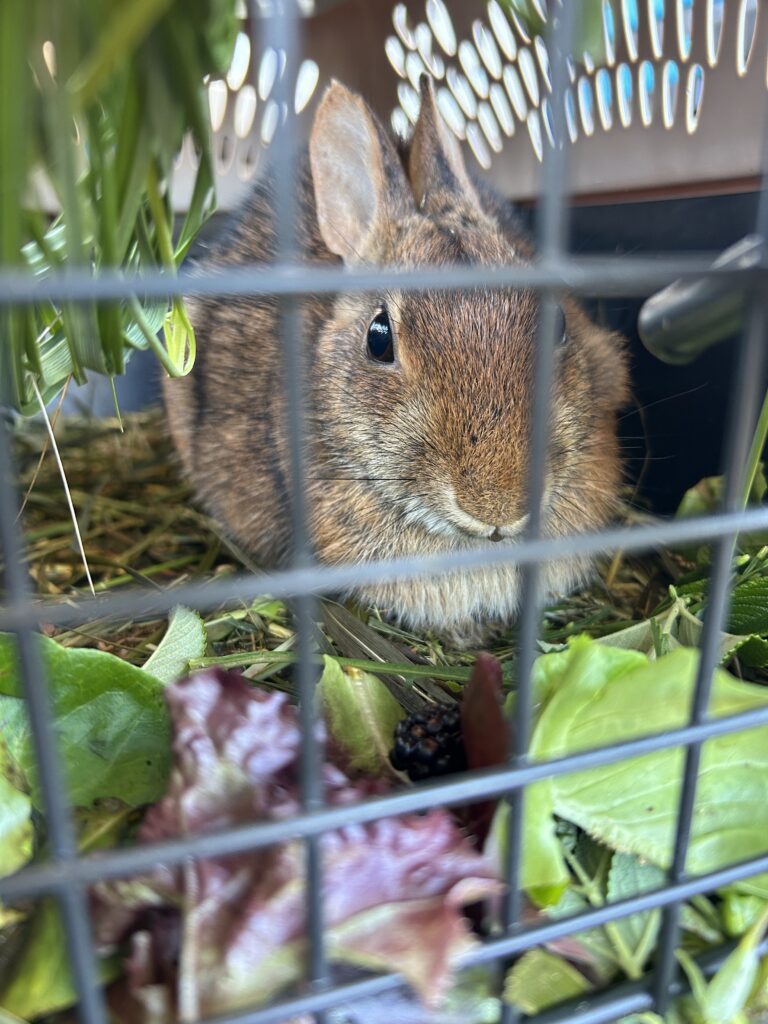
I was able to watch the process of getting the bunny from the trap into the crate. Rabbits are known to become very stressed easily. The trap had only the back side mesh exposed to the air, while the remainder was enclosed like a rectangular wooden box. This helps keep the bunnies calm, much like a safe underground burrow. No handling of the bunny takes place at all. First, a pillowcase-like bag is placed over the trap entrance, with the trap held upright and the bunny at the opposite end. The trap door is then secured open, and the bunny is gently encouraged into the bag by carefully tipping the trap or blowing on the back side of the trap. Once in the bag, the bunny is weighed using a hanging scale. The bunny weighed 1,200 g (2.64 lbs), which is a very healthy weight. After this, the pet crate door is opened and the bag is placed in front of it while the bunny is gently coaxed into the crate. Once the bunny is inside, the crate door is quickly shut. We then carried the bunny down to the shaded tent area. The crate was bedded with hay, and a fresh water bottle was hung on the crate door. Fresh leafy greens and even some native plant leaves were provided for food. Certainly, the bunny was quite nervous during the processing, but once he or she (it is not possible to determine the sex without a close examination) was settled under the tent, it remained remarkably calm. It eventually appeared to eat a little food, particularly the native purslane plant.
Since only one New England cottontail was caught, we reconvened to discuss plans for where to set traps next. After lunch at camp, we set out on a scouting mission to look for signs of cottontails, such as bunny scat, trails through the brush, freshly browsed vegetation, and tracks in the sand. We broke up into three teams to scout as much area as possible. Our team of three surveyed the eastern coastline of the island, another team covered the western side along overgrown trails, and the third group followed an overgrown path into the island’s interior.
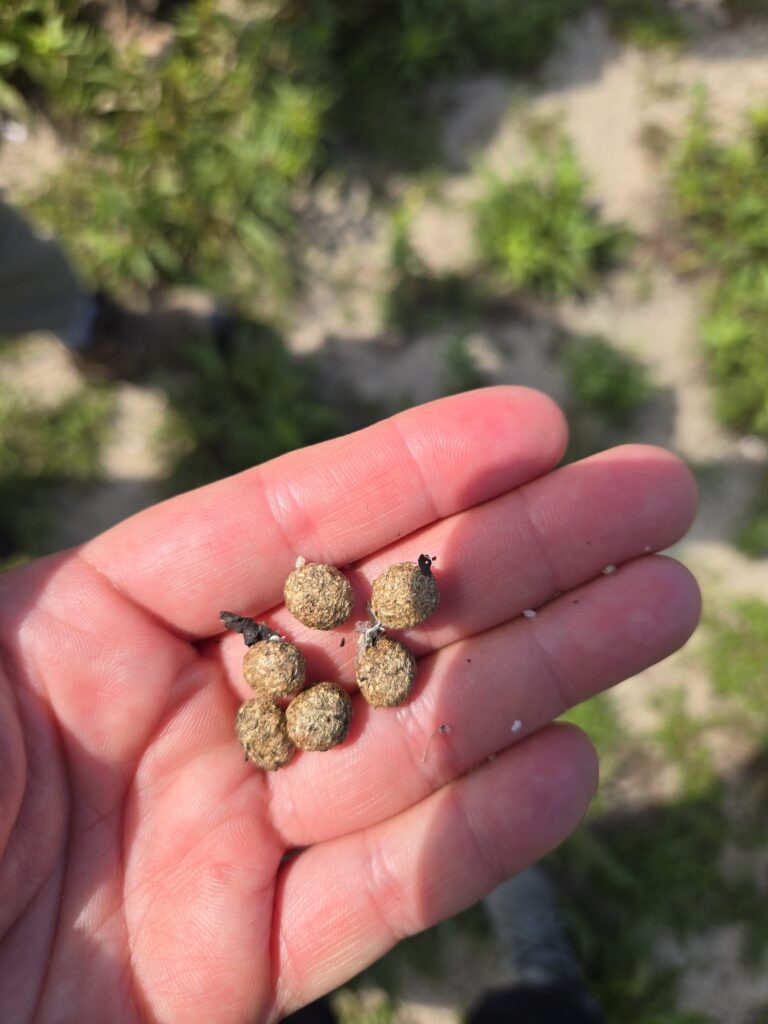
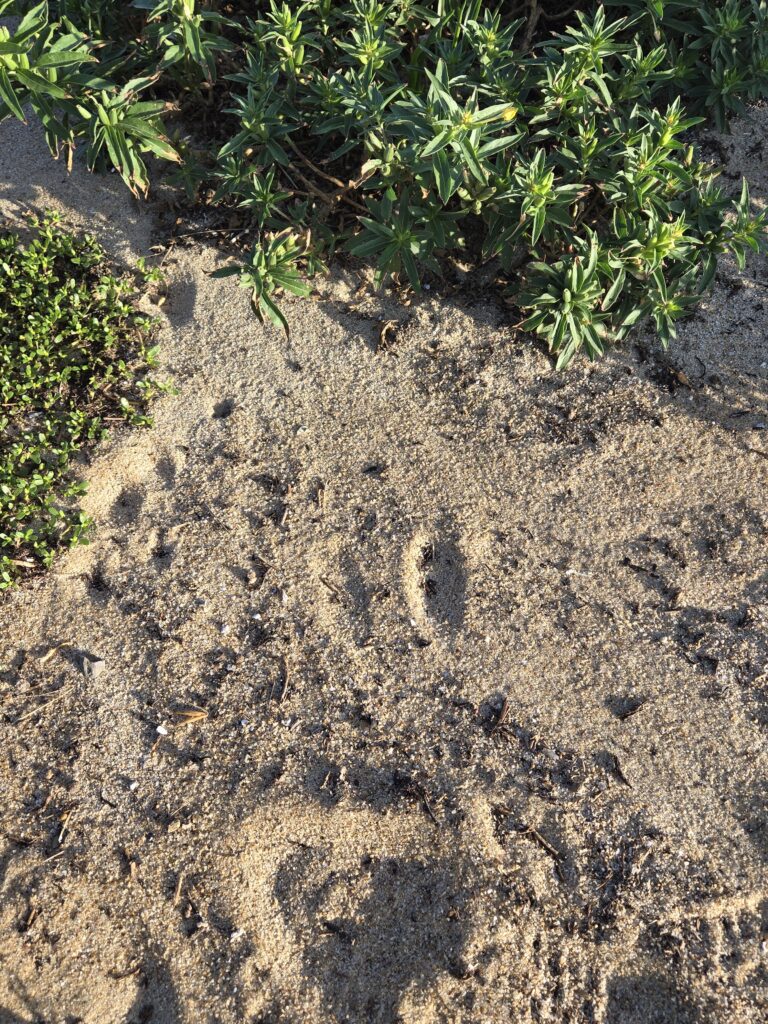
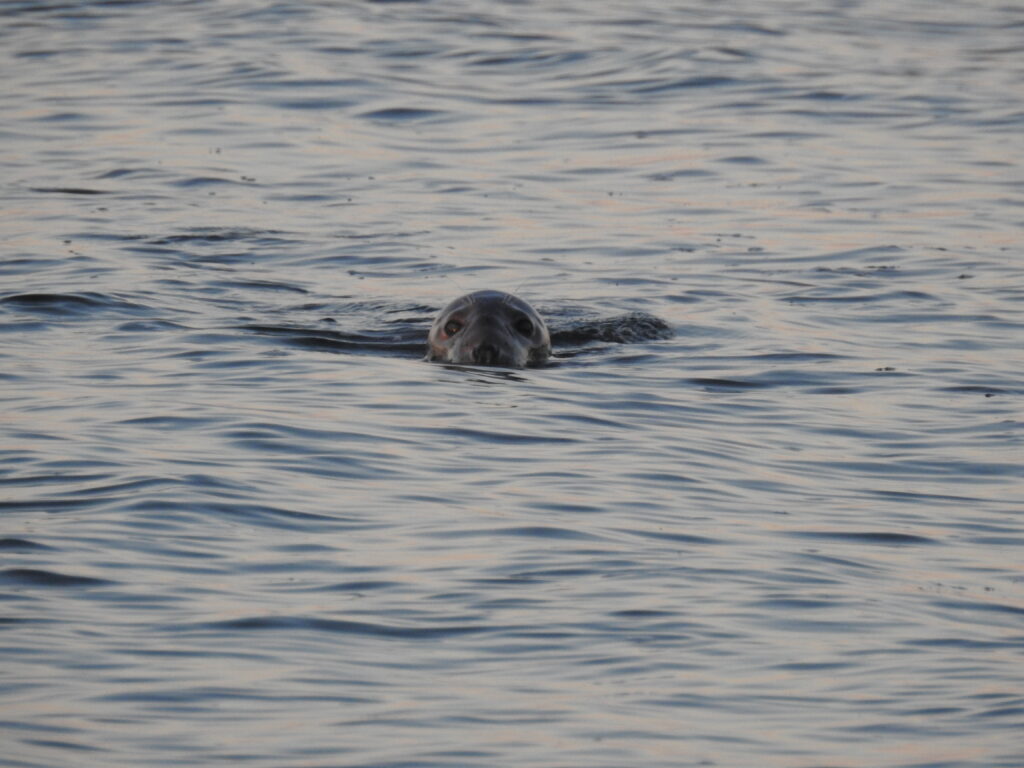
During our team’s scouting, we did find a few bunny trails, but nothing of particular significance, as no other signs were observed in the area. We did, however, have an amazing experience. Throughout the island, gray seals were a constant presence, often seen watching us from less than 50 feet offshore. At one point, we counted 30 seals observing us as we walked along the shoreline. As we continued, they would dive beneath the water and then pop their heads back up, seemingly following our progress. It felt as though they were genuinely curious about us. After all, people are not permitted on this island except on rare occasions for refuge staff, so we must have been as much a curiosity to them as they were to us. Several seals were basking on nearby rocks, sometimes appearing to compete for the best haul-out spots. We also came across cormorant rookeries, and all sorts of shorebirds were observed feeding along the coast. Unfortunately, lots of fishing gear, lobster gear, and other trash had washed ashore. With no one available to clean it up, debris was abundant. Oddly enough, it provided some items we needed for this project, including five-gallon buckets, a spray bottle, and rope.
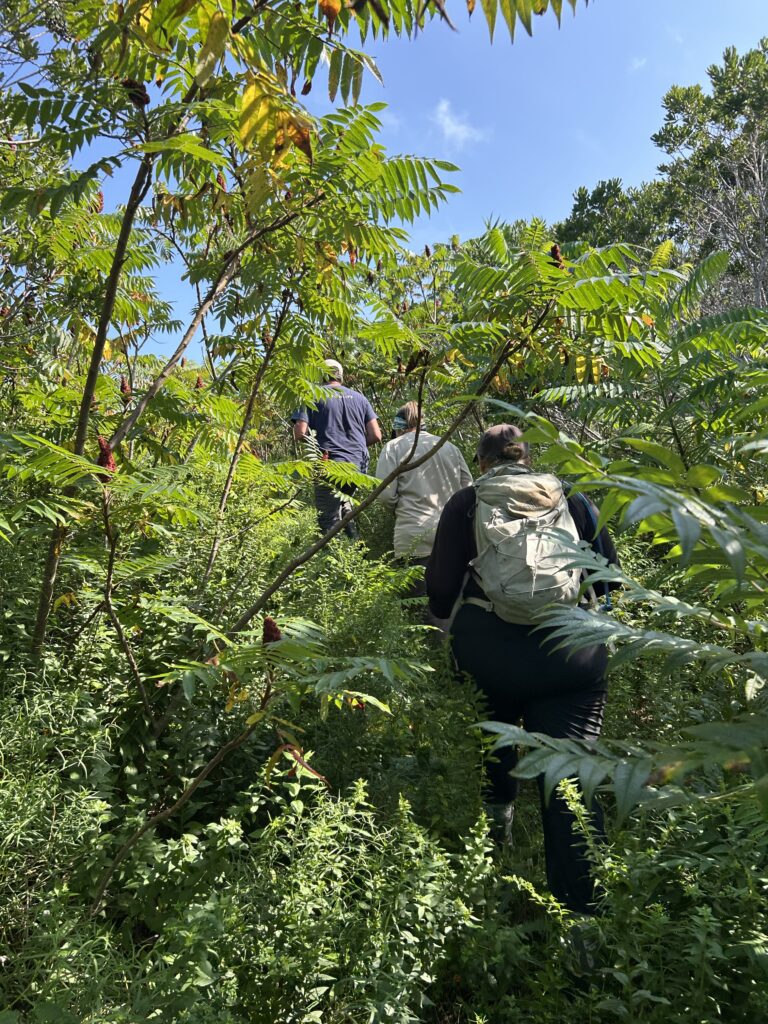
After our scouting mission, we reconvened again around mid-afternoon and decided to move a large number of traps, while some remained in place or were shifted only a short distance. We set traps along an old overgrown trail leading into the island’s interior, which was not easy to traverse. We had to push through weeds and shrubs that were at least waist- to chest-high, with thorny vegetation mixed in, all under the hot sun while searching for small paths made by the bunnies. Nearly half of our traps were set in this area, and fresh apple cider spray was applied around the trap entrances to create an enticing scent.
Finally, after a very tiring day, we had dinner back at camp. We were so exhausted that even my can of cold soup tasted good. We all enjoyed watching a beautiful sunset while a few gray seals watched us from offshore. Afterwards, we slept under a nearly full moon to the sound of countless crickets and the steady crashing of the waves.