
In honor of One Health Day, we’ve invited guest contributor Dr. Elise Paietta, Postdoctoral Research Scholar, Varsani Lab, The Biodesign Center for Fundamental and Applied Microbiomics at Arizona State University, to share about her work and how it aligns with the One Health concept.
We as humans are a significant part of the environments in which we live. We alter our ecosystems and bring with us animals that we use for farming (cows, pigs, chickens) or as pets (dogs, cats, birds) and some animals that we didn’t even know came along with us (rats, mice). Every day, we are interacting with land, air, and water shared by many species – from plants to wildlife to microbes – and these other species are interacting with us too! Researchers have found that one of the best ways to understand human health is to understand the health of not only our communities, but the animals and environment we interact with. In addition, the health of humans and our domestic animals can also impact wildlife and the environment. This intersection between human health, animal health, and environmental health is called ‘One Health’. As we see deforestation, land use change, and climate change accelerating across the planet, the use of One Health approaches is becoming more crucial than ever as people and animals are interacting increasingly frequently.
So, how are we using the One Health approach?
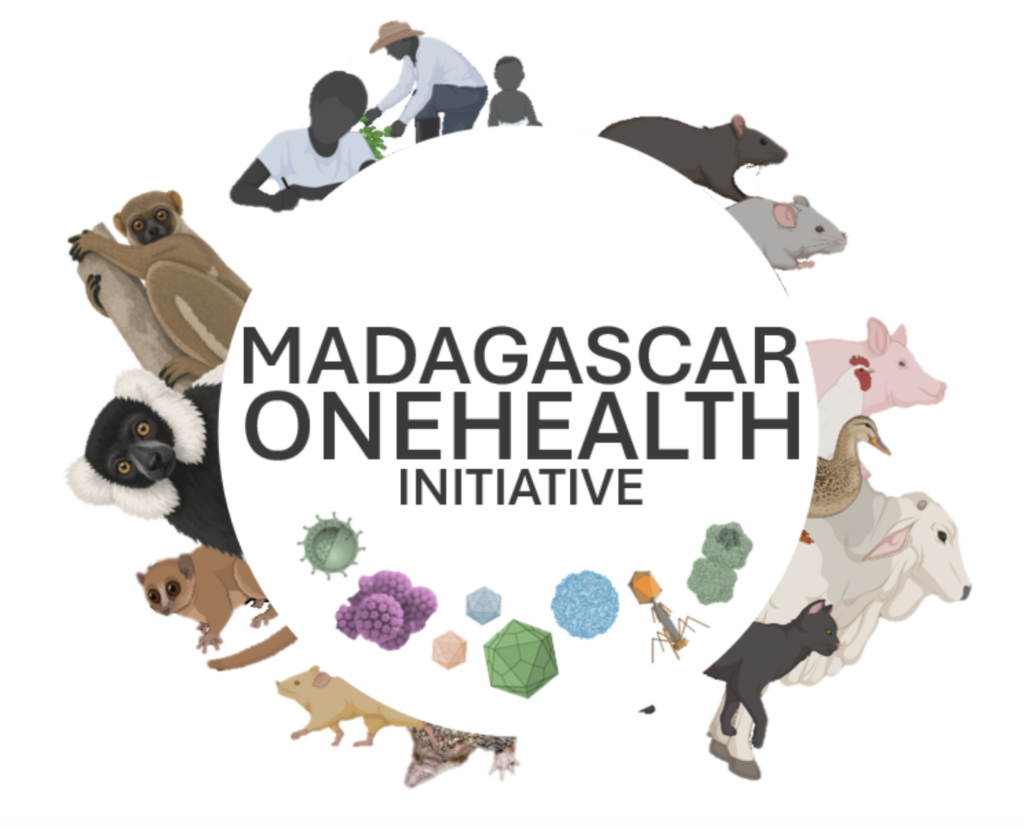
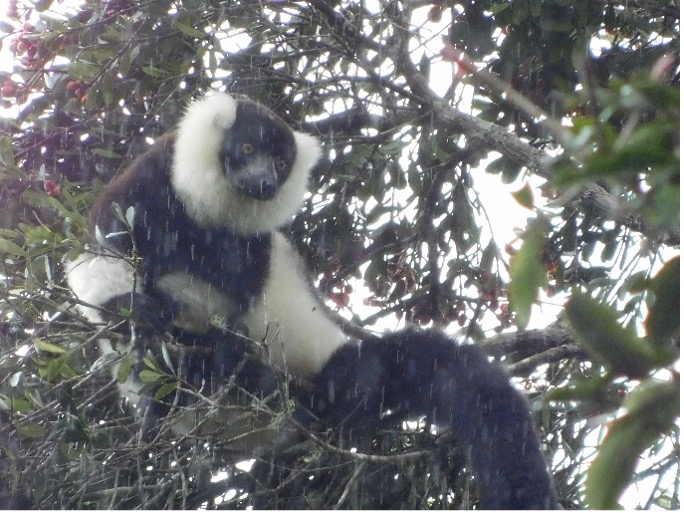
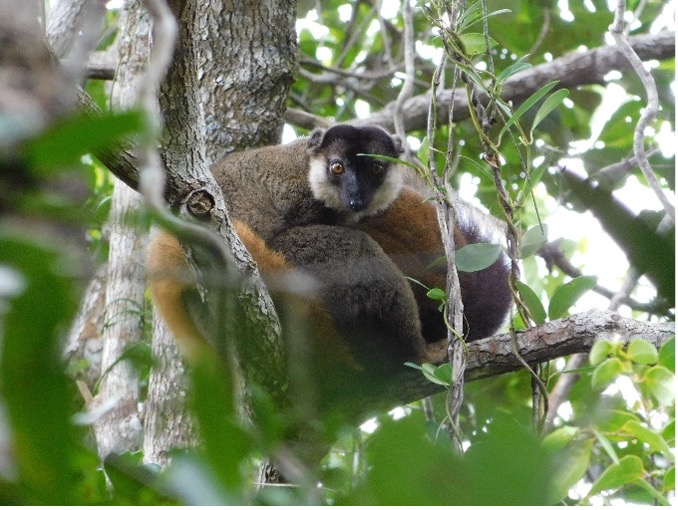
I’m Dr. Elise Paietta and I’m a researcher at Arizona State University where I help to lead the Madagascar One Health Initiative in southeastern Madagascar with researchers at Zoo New England! We also collaborate with some great non-governmental organizations including Health In Harmony and Mahaliana Labs and incredible communities in the region. In the forests and surrounding area of the Manombo Special Reserve in Madagascar, there are many factors at play that could contribute to the rise of infectious diseases: community lack of access to food, clean water and healthcare, intense cyclones destroying homes and causing standing water (which affects mosquito populations!), wildlife hunting, grazing of livestock within the rainforest, intense wildfires, and drought (just to name a few). In our initiative, we integrate animal, human and environmental health to discover new and known viruses and other microbes moving across this landscape. We don’t just study people or one animal species, we’re studying many species that interact including endemic animals (lemurs and rodents that are only in Madagascar!), invasive animals (black rats and house mice), domestic animals (cattle, pigs, chickens, ducks, cats), and of course the 31 villages that live in or near the Manombo Special Reserve. The lemurs we study are some of the most endangered species on the planet.! Check out the critically endangered black-and-white ruffed lemurs and white-collared brown lemurs we study at Manombo. We also study mouse lemurs (yes these are lemurs the size of a mouse!), woolly lemurs, and bamboo lemurs. There are more than 100 species of lemurs only in Madagascar that have evolved on the island for around 65 million years.
So, what have we accomplished so far?
• We’ve characterized more than 700 virus genomes from lemurs and rodents and more than 600 virus genomes from people in Madagascar.
• Lemur viruses are incredibly unique and diverse and reflect their evolution on the island of Madagascar. We’ve published the first genomes of herpesviruses, polyomaviruses, adeno-associated viruses and circoviruses in lemurs – contributing to our knowledge of lemur health.
• Invasive black rat viruses are similar to those found in globally distributed black and brown rat populations….with the exception of a new poxvirus. This poxvirus shows some similarity to human-infecting molluscum contagiosum virus, but it’s very unique and now represents its own genus and species. The majority of zoonotic poxviruses emerge from rodents.
• Invasive black rats at Manombo also harbor other pathogens, including rat lungworm. Rat lungworm is a zoonotic parasite that causes inflammation in the brain of humans, when humans are accidentally infected.
• Viral sequences from humans were similar to known human viruses from around the world, but multiple viruses considered rare or emerging were identified. Some viruses of public health interest identified include rubella virus, rotavirus A, astrovirus type 3, influenza C virus, human coronaviruses, Merkel cell polyomavirus, and Epstein-Barr virus. Rare or emerging viruses include enterovirus C105 and enterovirus C117. And, we found a couple of new viruses.
• For more than 5 years now, our collaborator Health In Harmony has also provided a mobile healthcare clinic that visits villages every day and a bunch of different community-led programs including education, latrines, rainwater catchments, chicken farming, insect farming, fish farming, reforestation, agroforestry, and forest guardian jobs to tackle deforestation and extreme poverty.
So, what’s next?
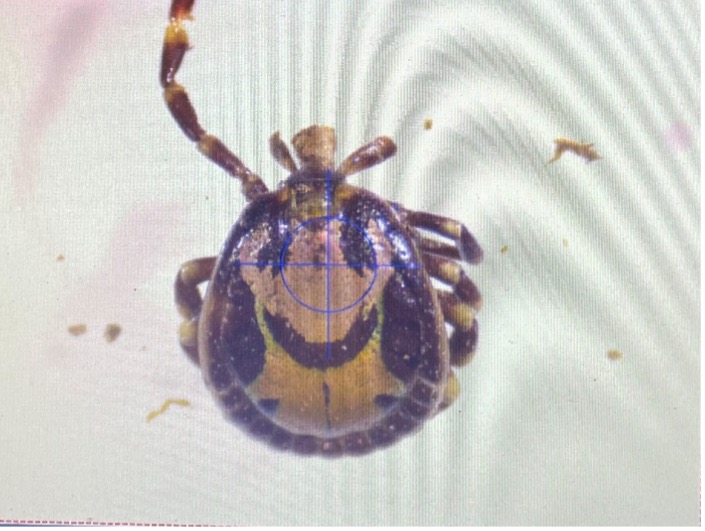
I’m actually visiting Madagascar right now.!! One of our next steps is to focus on all ofall our samples from domestic animals, especially cattle and pigs.! Domestic animals are known to harbor some of the highest numbers of zoonoses (pathogens that can move from animals to people) and some of these can be transmitted via ticks. Check out these photos of myself and team veterinarian Dr. Santatra Randrianarisoa examining cattle ticks at Mahaliana Labs in the capital of Madagascar (Antananarivo). One tick is even smiling for the camera ????
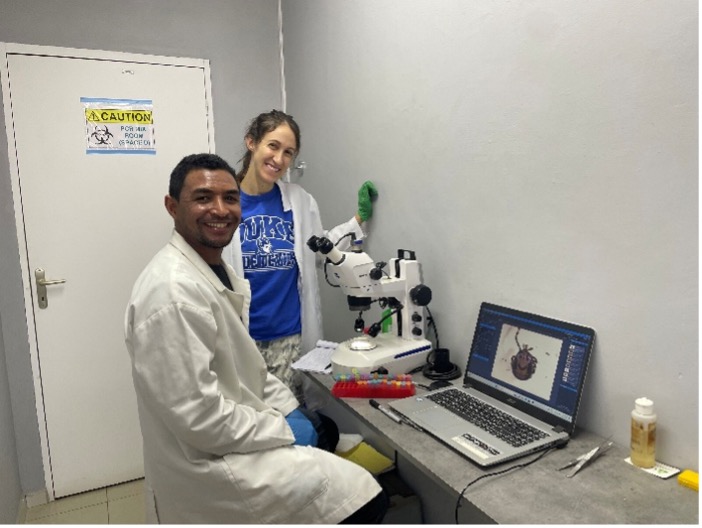
We are so excited to share about the Madagascar One Health Initiative with you all during this special week.! Wishing a Happy One Health Day (November 3) and a Happy World Lemur Day (October 30) to all!
Leave a Reply