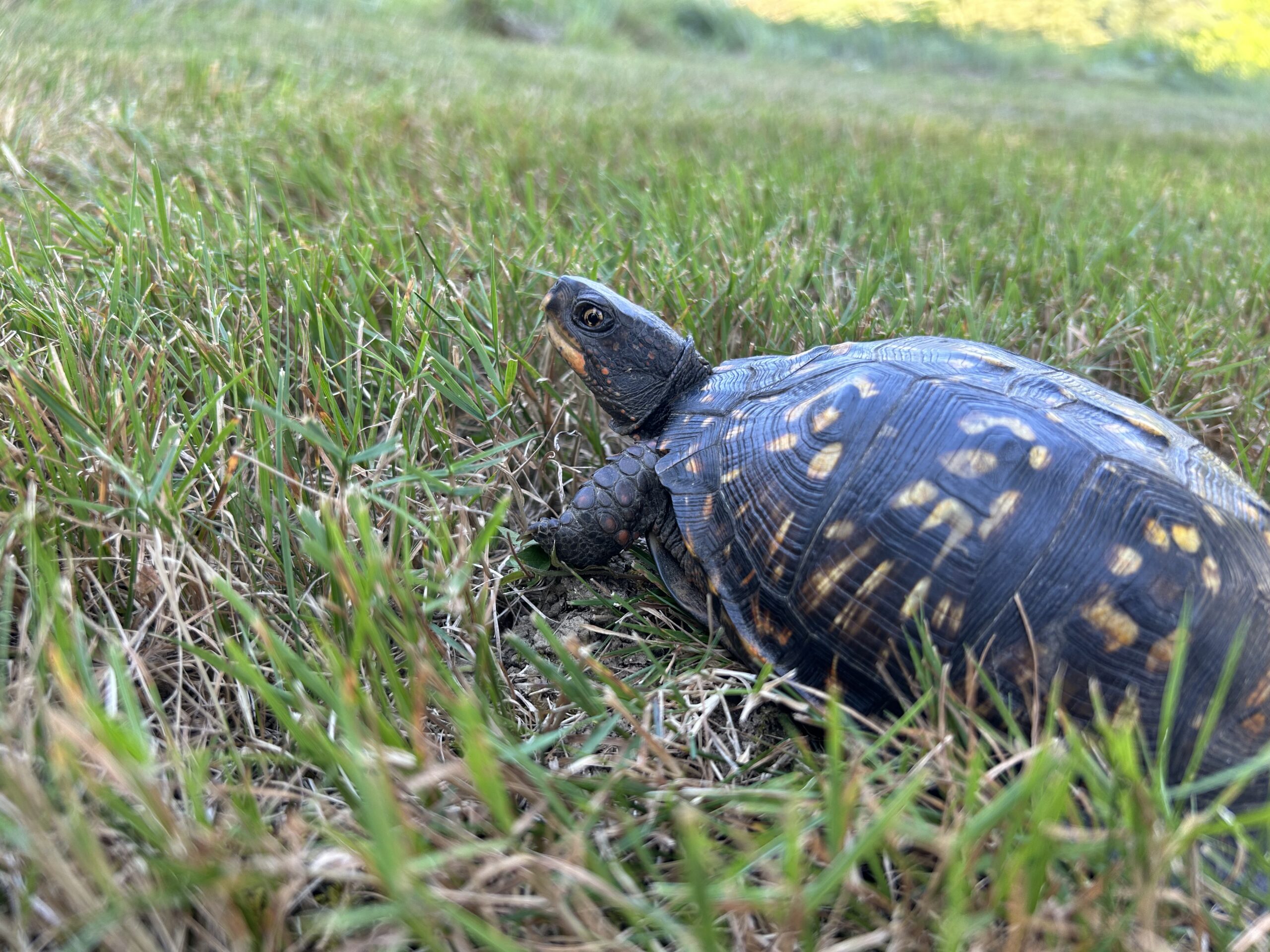
For our department, sometimes our afternoons are spent doing the kind of quiet, careful work that often goes unnoticed, but can make a life-saving difference for wildlife.
When a field near a population of Eastern box turtles we monitor was scheduled to be mowed, we knew we had to act. Their slow movement and natural camouflage make these turtles especially vulnerable to heavy equipment. If they go unnoticed, even one mowing can be deadly. Before any machinery entered the field, our mission was simple: ensure it was safe.
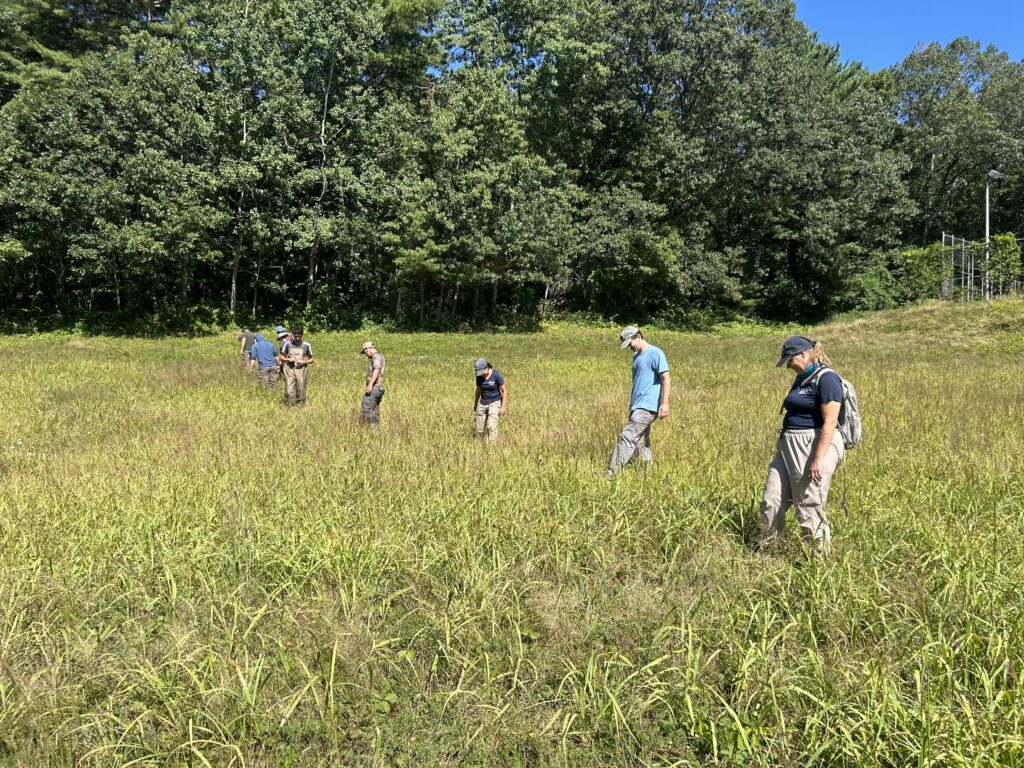
With the help of New Hampshire Fish and Game we spread out across the field, methodically conducting a sweep check. For hours, we walked transects, eyes trained on the ground, scanning for any signs of a box turtle. By the end of the sweep, we were relieved to find no box turtles in the field itself. But our work didn’t stop there. We know that several radio-tagged box turtles regularly use habitat near this field, so we took the extra step of tracking those individuals. Using radio telemetry, we located a few turtles we’ve been monitoring and confirmed that they were a safe distance away from the mowing area. Knowing their locations gave us confidence that the immediate risk had been minimized. Then came the moment that reminded us why fieldwork always requires attention, even when you think the job is done.
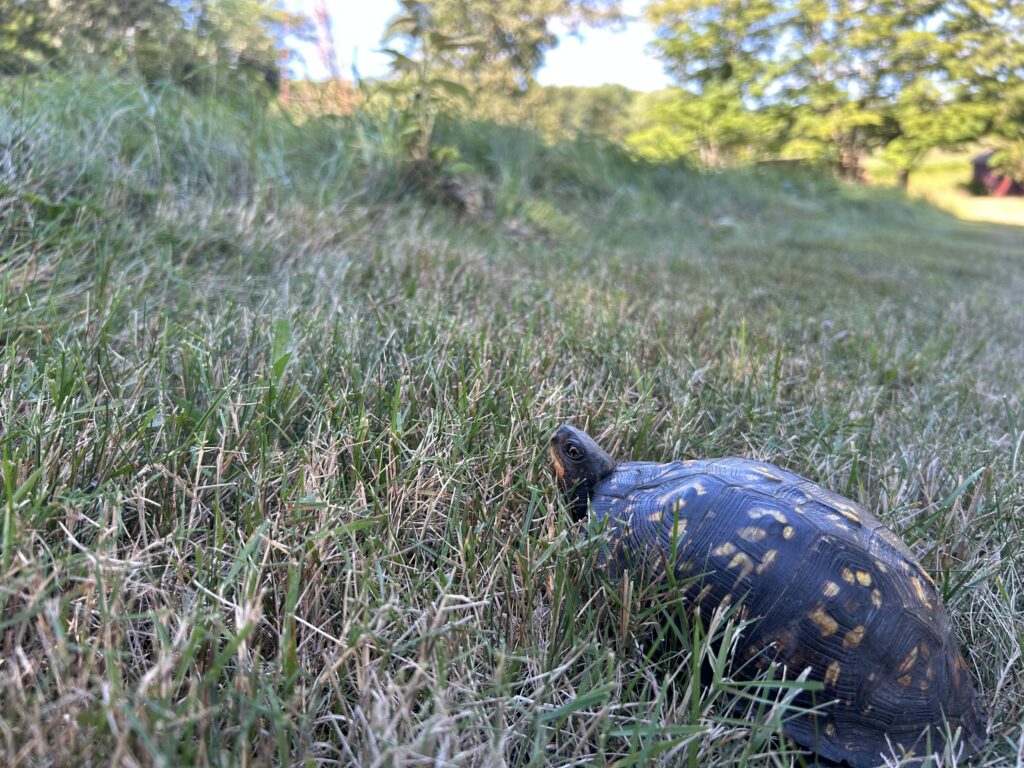
As we walked back toward our cars, no longer actively searching, we crossed the field one last time. That’s when we stumbled upon a young adult female Eastern box turtle named Fiona, an individual we recognized immediately. We had first encountered her during a field sweep last season, but at some point since her radio transmitter had fallen off, and therefore we had lost track of her movements. Finding her again was unexpected and incredibly meaningful. Had we not walked through that field when we did, she could have been at serious risk from the upcoming mowing. Instead, this chance encounter may have saved her life.
As a young adult female, her survival is especially important. She has the potential to lay eggs this spring, contributing to a population that depends heavily on the persistence of mature breeding females. We were able to fit her with a new radio transmitter, allowing us to monitor her movements once again. With this information, we’ll hopefully be able to locate and protect her nest later in the season, giving the next generation a fighting chance.