
To many people, turtles may all look alike, quiet, slow-moving creatures with a shell. But for biologists working to study and protect turtle populations, being able to recognize individuals is essential. Across the world, conservationists use a variety of creative and species-specific methods to identify and track turtles, each a window into the important story about where that turtle has been and how it’s surviving.
Shell Notching
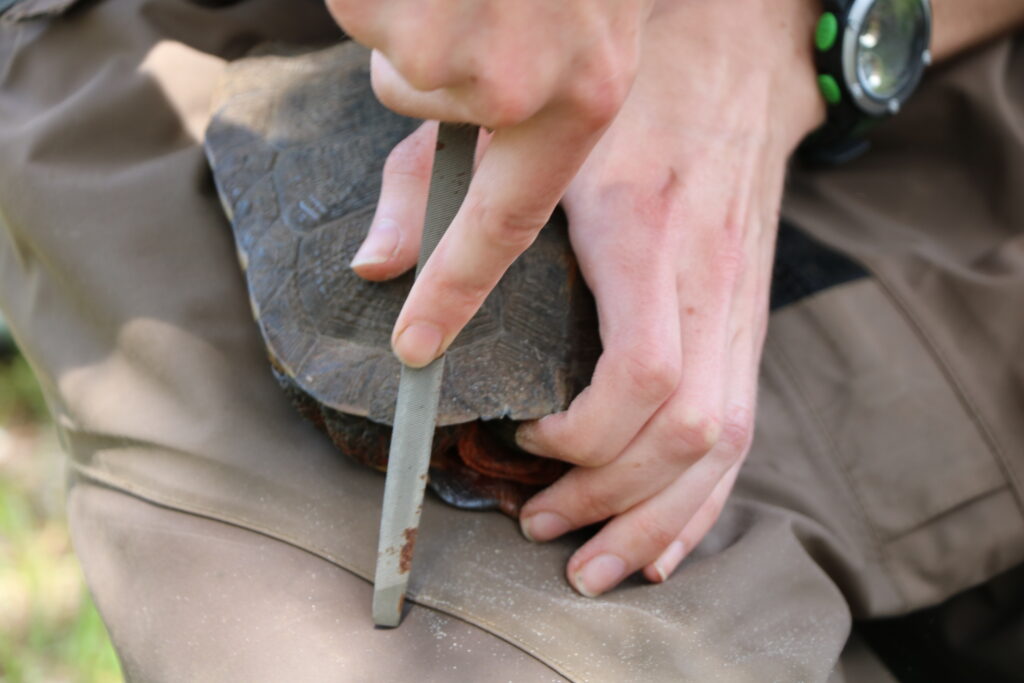
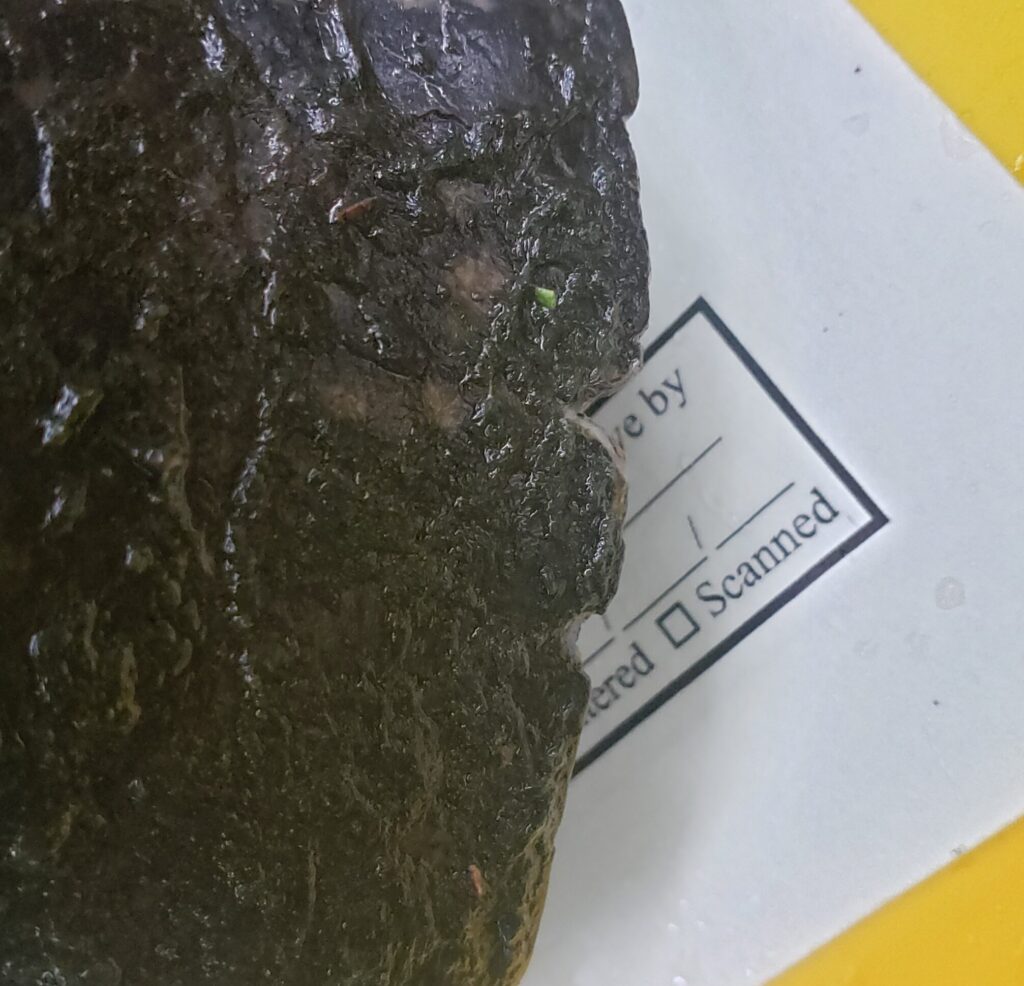
A common turtle identification method is shell notching. Our team uses this method with a triangular file to carefully notch the marginal scutes (the plates along the edge of the shell). Each notch corresponds to a specific numbering system, allowing us to give each turtle a unique ID. Elsewhere, biologists may use round or square files instead of triangular ones. Regardless of shape, the purpose is the same: to create a permanent, minimally invasive mark that allows researchers to identify turtles years, or even decades later. When done correctly, shell notching does not harm the turtle and remains visible for a long time.
External Tags
In some regions and for some species, biologists use external tags attached directly to the shell. In Arizona, for example, desert tortoises (genus Gopherus) are often tagged with small paper tags attached to the back of their shells with clear glue, so they look like the tortoises have little license plates.
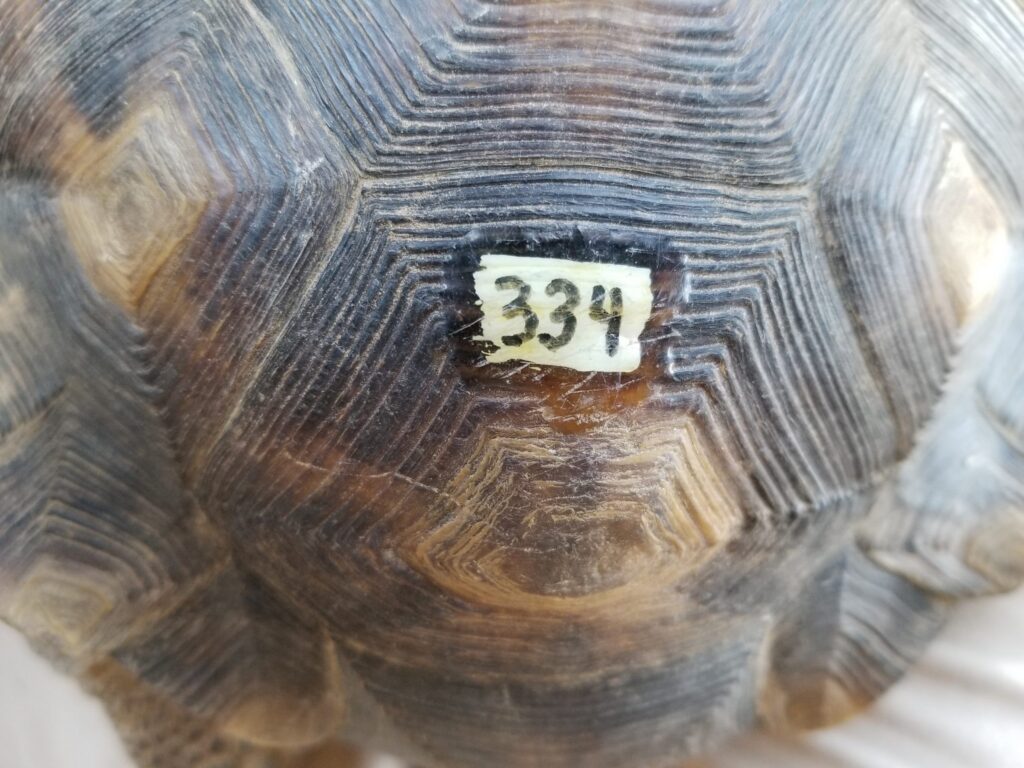
Each tag displays a unique number that can be easily read by looking at the shell while being small enough where it does not ruin their camouflage. Sometimes, the tag is applied by painting a layer of whiteout on the shell first, writing the numbers with a Sharpie, and covering it with clear glue so it is protected from the elements and lasts a long time.
The main reason scientists use this method of tagging turtles is to handle them as little as possible to keep stress minimal. Turtles often pee as a stress response when being picked up and handled – for our turtles here in New England that isn’t usually a problem since they spend a lot of time in the water and can rehydrate themselves easily. Desert tortoises, however, can go months without access to drinking water and peeing due to being handled might mean they lose all the water they’ve been storing for the year. Therefore, protocols require scientists to handle the tortoises as little and as gently as possible, which usually includes not being allowed to turn tortoises on their back and having to rehydrate them when they do pee – depending on where the work takes place, that might mean digging a little ditch, lining it with plastic and filling it with fresh water carried out for this single purpose to allow the tortoises to drink. Another method involves slowly dripping water onto their nostrils with a syringe which is how the tortoises take up water. While shell notching with a file does not harm the turtles, the friction and noise of the process is much more likely to cause a turtle to pee than glueing a small paper tag to the back of their shell which can theoretically be done without even picking the turtle up (if she is cooperative).
PIT Tags
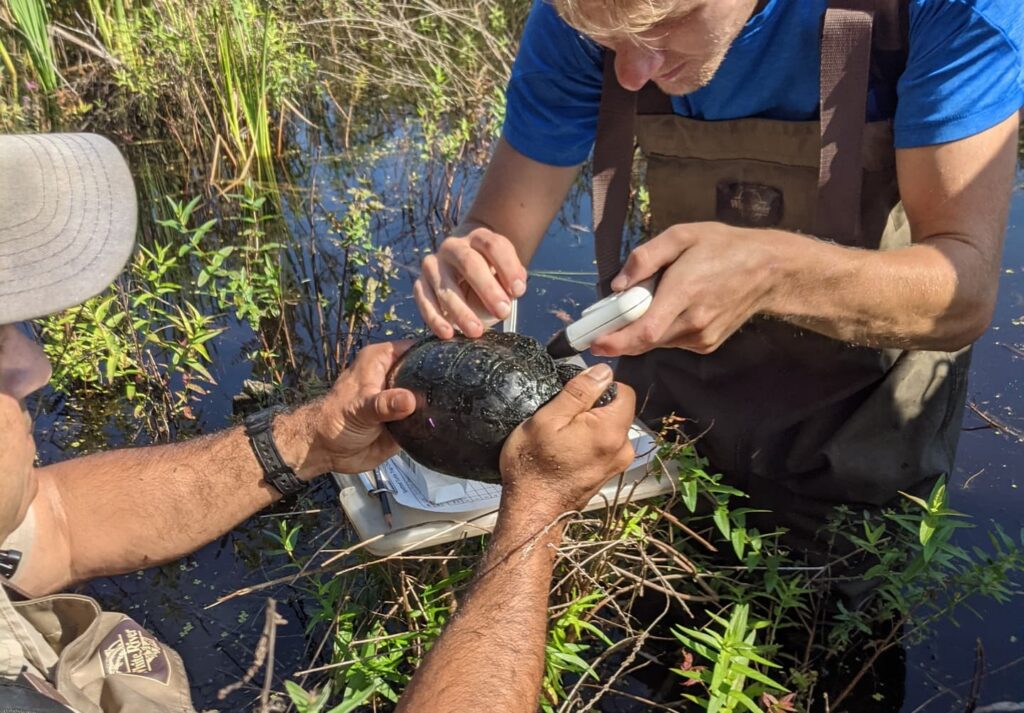
Some turtle species are identified using Passive Integrated Transponder (PIT) tags, the same type of microchip commonly used for pets. These rice-sized chips are injected under the skin and can be read with a handheld scanner. PIT tags are permanent and tamper-proof, but they require specialized equipment and close contact with the animal. Because you can’t see a PIT tag from a distance, they’re often used alongside other marking methods, our team uses this along with shell notching.
Turtle populations are declining across the globe and reliable identification allows conservationists to track survival, protect nests, manage habitats responsibly, and measure whether their efforts are making a difference. Every tag, notch, or transmitter represents more than a data point, it represents a living animal whose story is now part of a much larger effort to ensure turtles remain part of our landscapes for generations to come.